




Blog
What Drill Bit for an M10, M8, and M6 Tap? A Practical Guide and Tool Selection
Every machine operator, locksmith, or mechanic knows that M6, M8, and M10 threads are an absolute staple in everyday work. When faced with making them, one detail is crucial to the success of the entire operation: the perfect drill diameter selection. A hole that is too small almost certainly means a broken tap and lost valuable time, while one that is too large means a loose and unreliable connection.
At Technar, you will find a wide selection of HSS, cobalt, and VHM drills, as well as taps and machine coolants. Complete your workshop with experts in CNC machining! Feel free to contact us
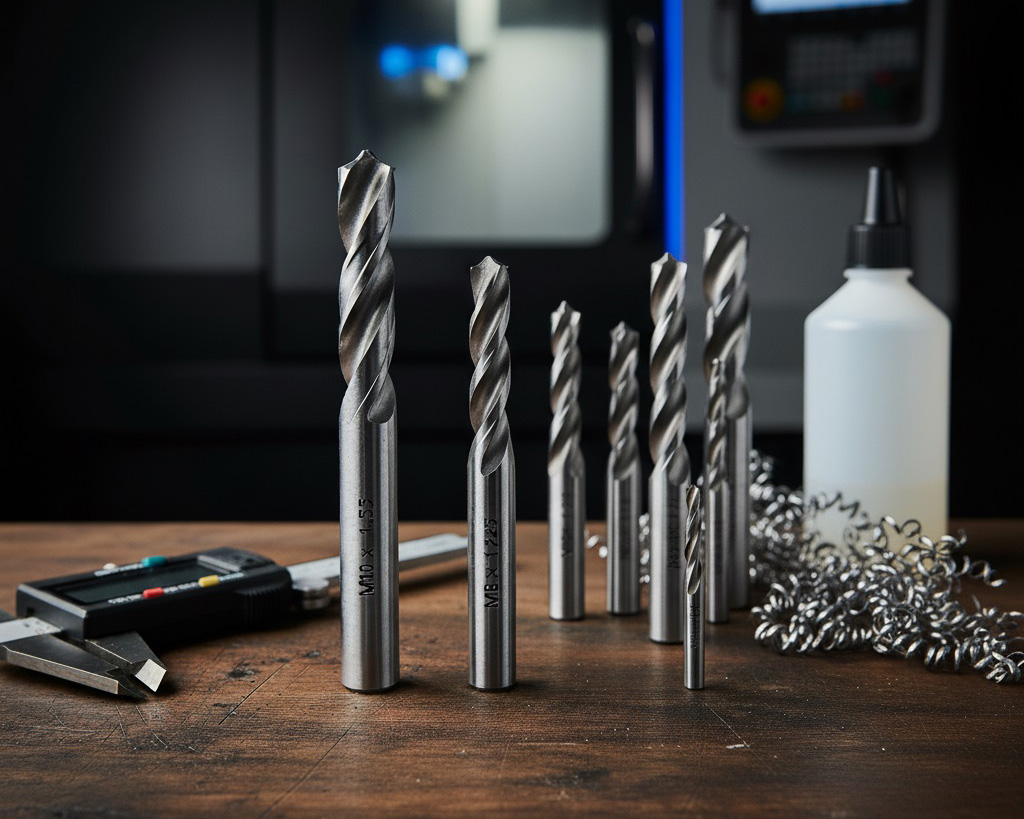
Most important first: What drill diameter for M6 and M8?
To save you time, here are the specific answers right away. These are the values you need to make correct holes for standard metric threads.
- M6 thread: For a standard M6 thread (1.0 mm pitch), use a drill with a diameter of Ø 5.0 mm.
- M8 thread: For a standard M8 thread (1.25 mm pitch), use a drill with a diameter of Ø 6.8 mm.
- M10 thread: For a standard M10 thread (1.5 mm pitch), use a drill with a diameter of Ø 8.5 mm
Remembering these two values will significantly simplify and speed up your daily work.
Where do these values come from? A simple formula for success
In the world of metal cutting, nothing happens by chance. The drill diameter for a tap is calculated using a very simple formula worth knowing:
Drill diameter = Thread diameter - Thread pitch
Let's see what this looks like in practice for our threads:
-
Calculation for M6 (1.0 mm pitch):
6 mm - 1.0 mm = 5.0 mm. The result equals the standard diameter of the drill. -
Calculation for M8 (1.25 mm pitch):
8 mm - 1.25 mm = 6.75 mm. Since 6.75 mm diameter drills are rarely found, in practice the nearest standard cutting tool, namely a Ø 6.8 mm drill, is selected.
Complete drill selection table - Check our technical data
Of course, metric threads are not only M6 and M8. In everyday work, we encounter dozens of other sizes, including fine-pitch, inch, and pipe threads. Creating simplified tables misses the point when precision is needed.
That is why at Technar we have prepared a convenient overview. On our website you will find a detailed table that is an invaluable source of knowledge for every professional.
We invite you to view and bookmark the link to our official table:
Thread hole diameters - Technar technical data
This is the most complete source, one that is always worth returning to.
Diameter is not everything. Which drill should you choose?
Diameter selection is half the success. The other half is choosing a drill made from the right material, matched to the workpiece being machined. This is where professional CNC tools and industrial tools play a key role.
-
HSS drills
(high-speed steel):
This is a universal and economical choice for machining structural steels, non-ferrous metals, and aluminum. Ideal for workshop applications and single-part production.
-
HSS-Co drills
(cobalt):
If you drill difficult-to-machine materials such as stainless steel, acid-resistant steel, or heat-treated steels, drills with added cobalt are essential. They provide much greater resistance to high temperature and rapid wear.
Find professional cobalt drills for stainless steel at Technar! -
VHM drills (carbide):
In the world of CNC machines, this is the uncompromising solution. Solid carbide drills guarantee the highest precision, enormous productivity, and tool life, even when machining hardened materials. This is the best choice for serial production.
Discover the precision of VHM drills from our range of Kyocera tools.
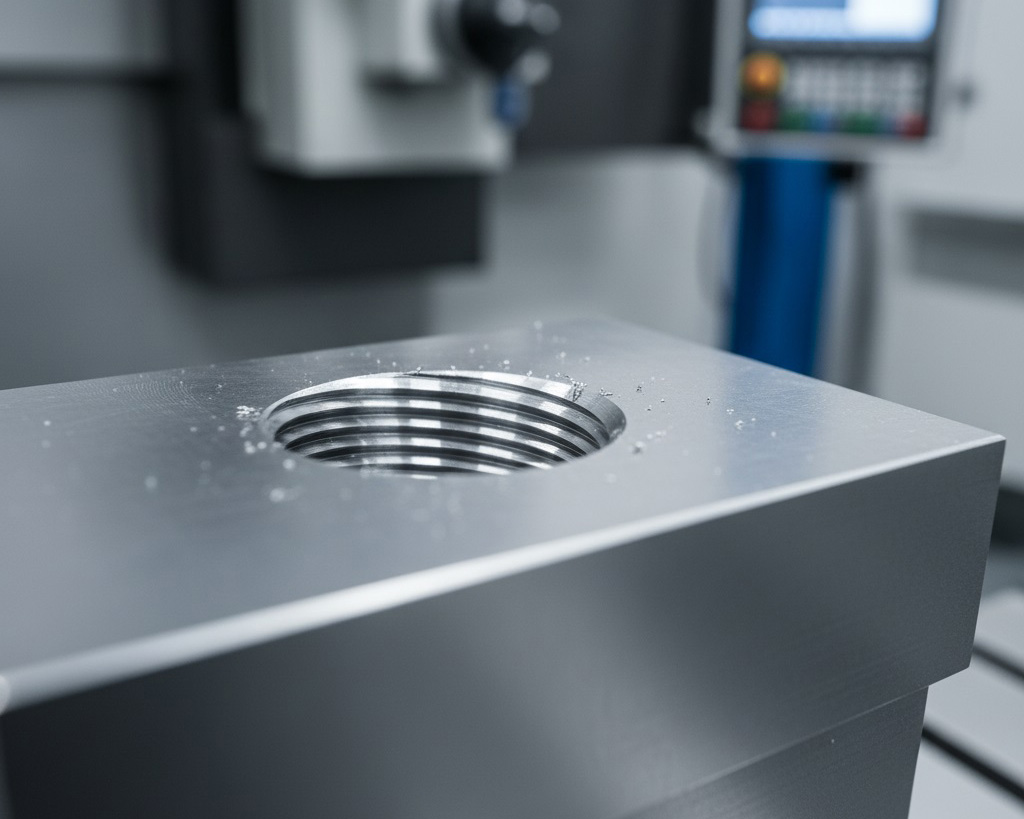
Best practices, or how to avoid breaking a tap
Finally, here are a few tips from our experts to help you make a perfect thread every time:
- Center punching: Always use a center punch or center drill. This provides guidance for the drill and prevents it from "wandering" across the material surface.
- Perpendicularity: Make sure the hole is perfectly perpendicular to the surface. This is crucial for proper tap operation.
- Cooling: Do not forget the important element that is CNC coolant! Proper lubrication and cooling significantly extends the life of both the drill and the tap, and also guarantees better thread quality.
- Chamfering: After making the hole, gently chamfer its edge. This will make it easier to introduce the tap and protect the first thread turn from damage.
Summary - Your recipe for a perfect thread
We hope this article has cleared up all your doubts. Remember these two key pieces of information:
- For an M6 thread, drill a Ø 5.0 mm hole.
- For an M8 thread, drill a Ø 6.8 mm hole.
- For an M10 thread, drill a Ø 8.5 mm hole.
For detailed data on other threads, refer to our professional technical table.
True professionalism starts with solid fundamentals, and selecting the right drill is one of them. Combining the correct diameter, the right tool type, and proper technique is a guarantee of success.