




Blog
What are the types of CNC machining? A guide to key cutting methods
CNC machining (Computerized Numerical Control) is the foundation of modern industrial production. Thanks to computer control, it enables the production of complex components with exceptional precision and repeatability that cannot be achieved with manual methods. This process involves removing excess material (subtractive machining) to give a raw block the desired shape. However, "CNC machining" is a broad term that includes many different methods. The choice of the right technique depends on the geometry of the part, the type of material, and the required accuracy. At the heart of each of these methods are high-performance CNC tools.
Do you have questions about selecting the right tools for your CNC application? Our technical advisors will gladly help optimize your cutting processes. Contact us or check our full range of cutting tools .
1. CNC milling - precise surface shaping
Milling is probably the most versatile machining method. This process involves removing material using a rotating multi-edge tool, namely a milling cutter.
How does it work? Unlike turning, here the tool (milling cutter) performs the main rotary motion, while the workpiece is fixed on the machine table (or in a fixture) and performs the feed motion. Modern 3- or 5-axis milling centers can move the tool and table in many planes simultaneously, allowing very complex 3D shapes, grooves, pockets, or flat surfaces to be created.
Key tools: Of course, the key role here is played by CNC milling cutters . Their selection is critical to process efficiency. Depending on the material (steel, aluminum, cast iron, plastics) and operation (roughing, finishing, face milling), end mills, face mills, cylindrical cutters, or ball nose cutters are used, most often made of solid carbide (VHM) or high-speed steel (HSS).
2. CNC turning - ideal for rotating components
Turning is the basic method for machining parts shaped as solids of revolution, such as shafts, sleeves, screws, or cones.
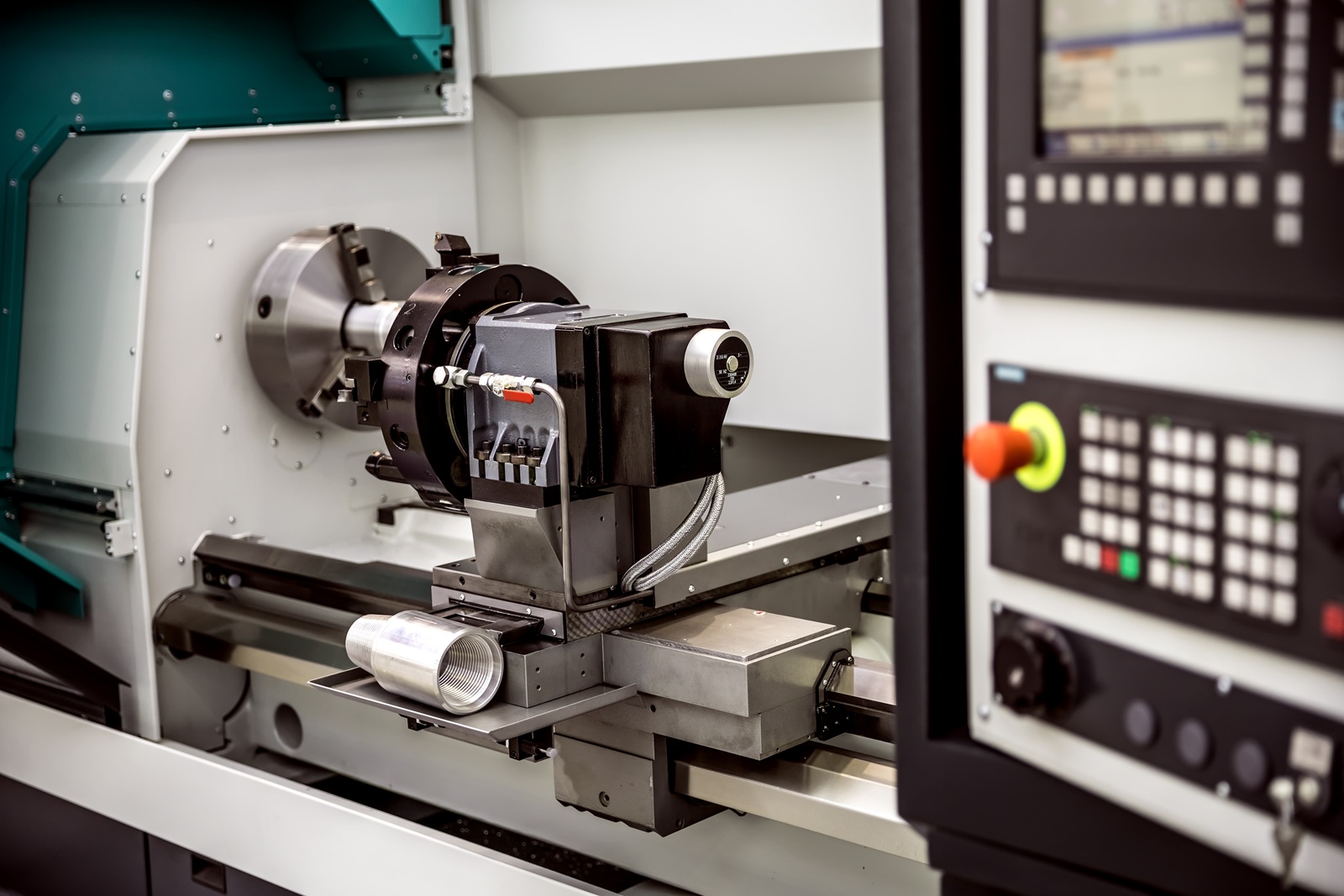
How does it work? In turning, the situation is the opposite of milling. Here, the workpiece is mounted in a chuck (for example, a lathe chuck) and performs a fast rotary motion. The tool - most often a turning tool - is stationary (apart from the feed motion) and "removes" material from the surface of the rotating workpiece, giving it the desired profile.
Key tools: The basic cutting tools for turning are turning tools . Modern CNC lathes most often use indexable turning tools, which consist of a shank (holder) and a replaceable cutting insert (e.g. Kyocera CNC inserts). This allows a worn cutting edge to be replaced quickly without having to reset the entire tool.
3. CNC drilling and boring - precise holes
Although drilling seems like a simple operation, in the CNC world it is a highly specialized process, crucial for component assembly (for example, for threads).
How does it work?
- Drilling: It consists of making a full hole in the material. The tool (drill) performs rotary motion and feed motion along its own axis.
- Boring: This is the process of machining an existing hole (for example, drilled or cast) in order to enlarge it, improve dimensional accuracy, shape, or surface quality.
Key tools: Holes are, of course, made using CNC drills . In industrial machining, ordinary HSS drills are rarely used. Solid carbide (VHM) drills dominate, often with internal cooling (channels that deliver coolant directly to the cutting edge), or drills with replaceable inserts, which provide enormous efficiency and tool life.
Do not forget the foundation: tooling and coolant
The CNC machining methods described above have one common denominator: for them to be effective, cutting tools alone are not enough. What surrounds them is equally important.
Even the best milling cutter or the most expensive drill will not ensure precision if it is not mounted stably. That is why machine tooling plays a key role - that is, precise tool holders (e.g. ER, BT, HSK holders), lathe chucks, or machine vises.
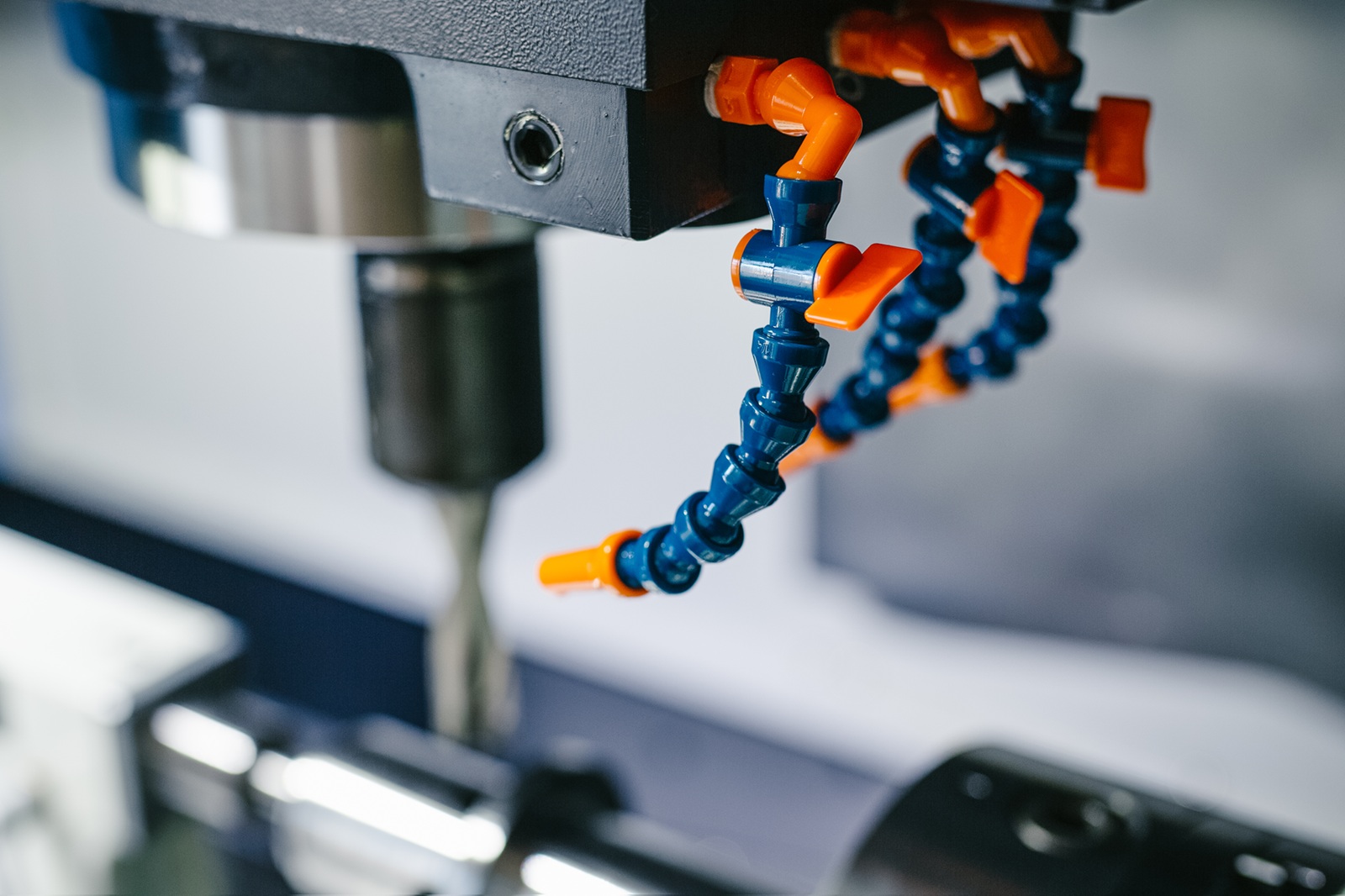
The second key element is the right coolant . During cutting, enormous amounts of heat are generated, which can destroy the tool and negatively affect the workpiece. Coolant (oil emulsion) not only cools the machining zone but also lubricates it and helps remove chips.
Summary
Choosing the right machining method - milling, turning, or drilling - is the first step toward producing a precise component. Each of these techniques is based on advanced machines, but their true potential is unlocked only by properly selected, high-quality CNC tools.
Understanding these basics makes it easier to select the technology for the task, which translates into lower production costs and higher quality of the final product.