




Blog
The Role of Coolant in Precision Machining of Large-Diameter Holes: Optimizing Cutting Parameters
Machining large-diameter holes, such as cylinders in engine blocks, bearing seats, or industrial valve components, is one of the most demanding tasks in modern production. When large diameters, deep drilling, boring, or honing are involved, operators usually focus on spindle rigidity and selecting the right cutting edges. However, even top-class CNC tools will not show their full potential if we forget one of the most critical elements of the process: a properly selected machining fluid.
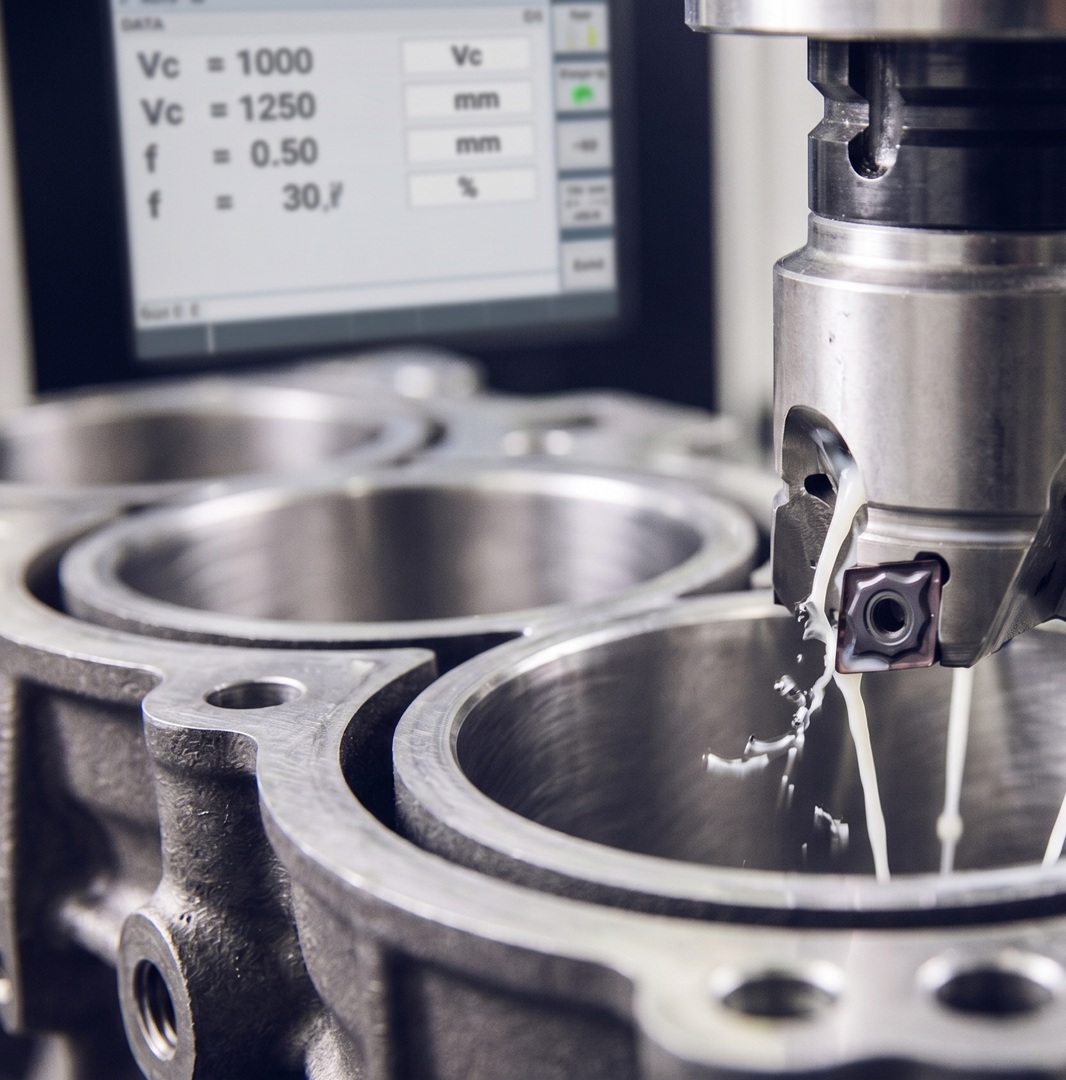
1. Thermal Stability - The Foundation of Dimensional Precision
When machining large-diameter holes, the contact area between the tool and the material is much larger than in standard operations. This generates enormous amounts of heat. If the temperature of the workpiece is not strictly controlled, thermal expansion will occur.
Imagine the process of boring a cast-iron engine block. If the material heats up excessively during cutting, the hole will "swell." The operator measures the workpiece and gets a result within tolerance, but after the part cools down at the quality control station, it turns out that the dimension is defective. High-quality CNC coolant removes excess heat in just a fraction of a second, ensuring thermal stability.
2. Effective Chip Evacuation from Deep Zones
Unlike external machining, where chips fall freely to the bottom of the machine's working area, internal machining, especially of deep holes, creates a kind of "trap." Accumulated chips are the main cause of:
- Scratches and damage to the machined surface (a drastic drop in the Ra parameter),
- Chipping of cutting edges,
- Tool blockage and costly collisions.
Using high-pressure through-spindle coolant (IKZ) is the only way to continuously flush chips out of the working area. Under these conditions, modern CNC drills with indexable inserts and massive boring heads operate successfully.
3. Lubrication and Protection of the Cutting Edge
In processes such as finish boring or honing, the lubricating properties of the coolant are just as important as its cooling properties. The fluid creates a thin film, known as a lubricating film, between the cutting edge and the workpiece material. As a result, cutting tools encounter less resistance, which brings specific benefits:
- Reduced built-up edge (BUE): Material particles do not adhere to the cutting edge.
- Extended tool life: The right emulsion makes milling cutters, boring bars, as well as turning tools and indexable inserts used in internal boring, operate much longer.
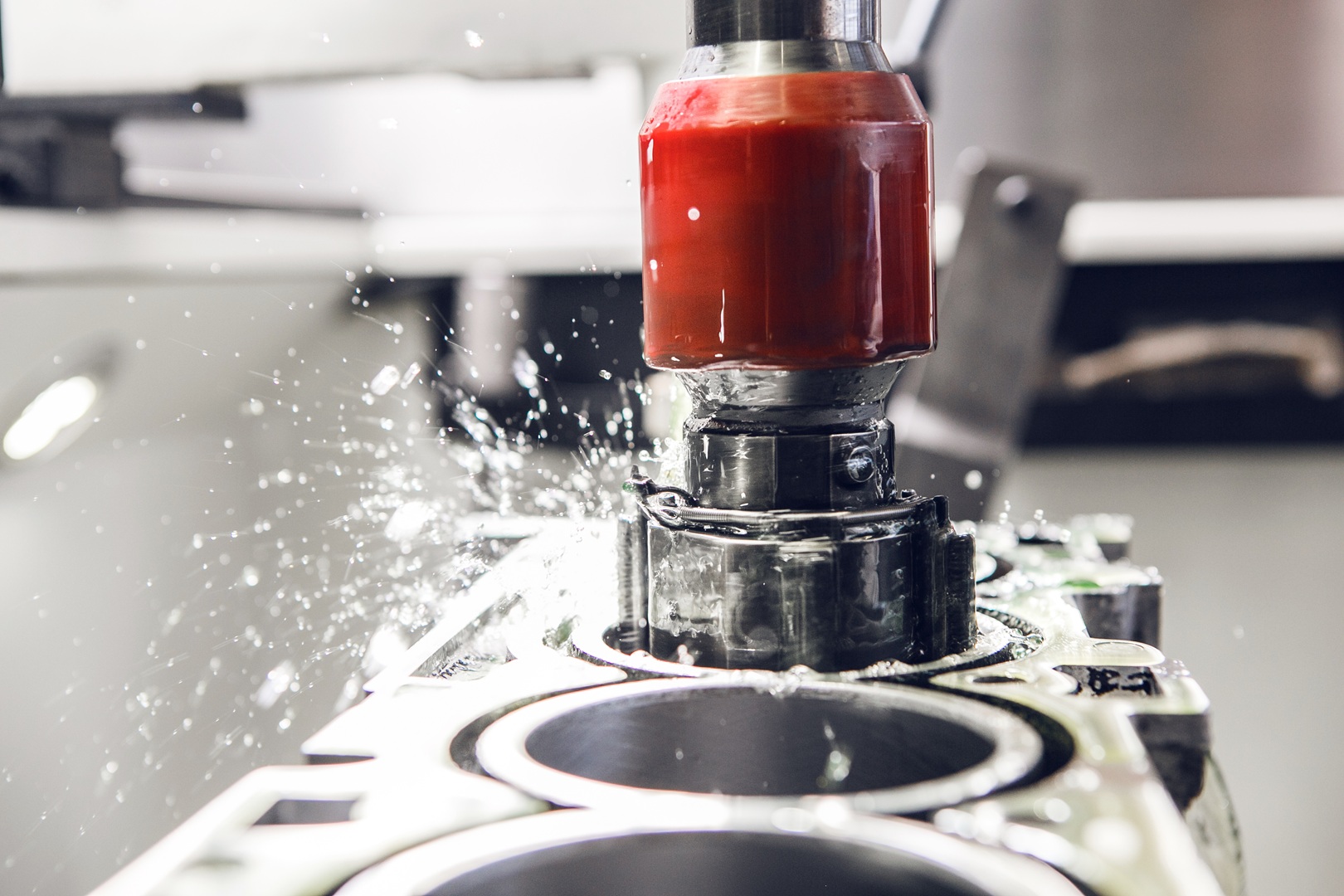
4. Optimizing Cutting Parameters - How to Reach the Next Level?
Using an optimal, biologically stable, and properly concentrated coolant allows technologists to safely "turn up" machine parameters. Once we are certain that the process is thermally stable and chips are being evacuated efficiently, we can:
- Increase cutting speed (Vc): This shortens the machining time of a single workpiece. It is especially noticeable when using technologically advanced solutions such as Kyocera tools, which have special coatings resistant to high speeds, provided constant coolant access is maintained.
- Increase feed rate (f): Faster tool movement along the hole axis increases productivity (MRR - Metal Removal Rate) while maintaining excellent chip-breaking control.
Summary
Machining large-diameter holes leaves no room for mistakes. Coolant is not "just an additive"; it is an integral part of the M-H-W-T system (Machine-Holder-Workpiece-Tool), often determining the profitability of the entire job. At Technar, we fully understand the synergy between process fluids and tools. We invite you to contact our advisors, who will help optimize production at your plant by selecting ideal cooling and cutting solutions for your applications.