




Blog
Modern Milling Inserts: How Coatings and Geometries Affect Cutting Performance
In the world of modern CNC machining, where every second and every micrometer matter, process efficiency is not a matter of chance. It is the result of precise component selection, and at the heart of every milling operation is the milling insert. Although it may seem like a small and simple component, its design contains advanced technologies that determine the speed, precision, and profitability of production. The two key factors that have taken modern cutting tools to a new level are cutting edge geometry and the type of coating applied to it. Understanding their role is the key to fully using the potential of CNC machines.
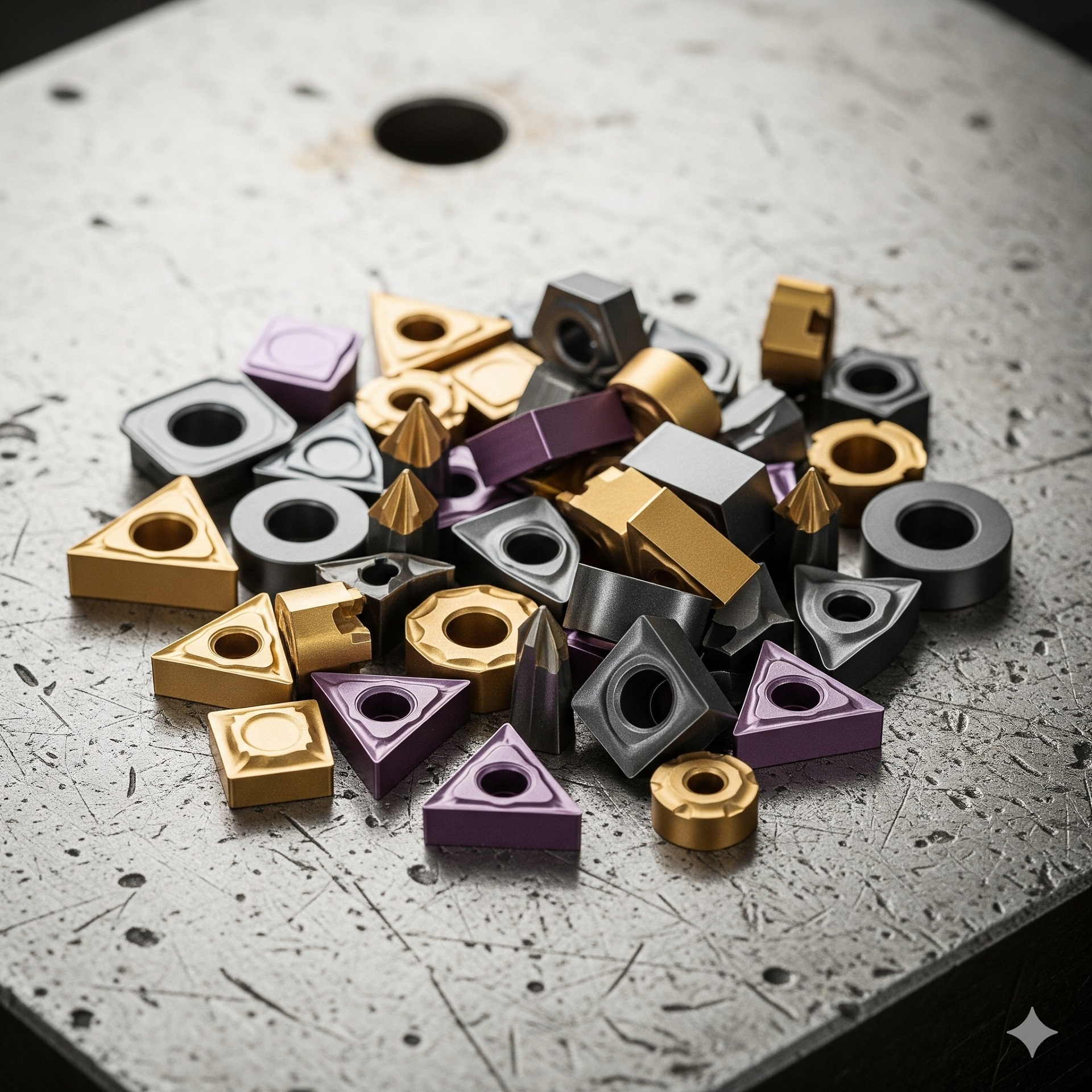
Insert geometry: the core of the operation
Geometry is simply the cutting edge shape, designed down to the smallest detail. It determines how material is removed, how the chip is formed, and what forces act on the tool and the workpiece.
- Rake angle: Defines how aggressively the edge "bites into" the material. Positive geometries with a positive angle generate lower cutting forces and less heat, making them ideal for machining ductile materials such as aluminum or low-carbon steels. Negative geometries are much stronger and allow work at higher feeds and depths of cut, but at the cost of greater forces. They are dedicated to roughing hard steels or cast iron.
- Chipbreaker: This is a specially shaped rake surface of the cutting insert. Despite the name, its task is not to break the chip, but to curl it properly and evacuate it from the machining zone in a controlled way. A well-selected chipbreaker prevents long chips from tangling, which is crucial for safety, process automation, and surface finish quality.
- Cutting edge microgeometry: The cutting edge can be perfectly sharp for non-ferrous materials, slightly rounded, known as a hone, or chamfered. These microscopic modifications strengthen the edge, preventing chipping when working in hard and unstable conditions.
Coating: the protective shield of the edge
If geometry is the brain of the operation, the coating is its advanced armor. The base material of the insert, cemented carbide, has excellent abrasion resistance at low temperatures, but loses its properties in the extreme heat generated during cutting. This is where modern coatings applied in PVD or CVD processes come into play.
Their main tasks are:
- Thermal barrier: They insulate the carbide core from temperatures reaching up to 1000°C, allowing cutting speeds to be increased significantly.
- Increased hardness: The coating layer is much harder than the substrate, which drastically slows abrasive wear and extends tool life.
- Friction reduction: The smooth coating surface acts like Teflon on a pan. It helps chips flow away and reduces the tendency of the workpiece material to stick to the cutting edge, known as built-up edge, which is critical when machining stainless steel or aluminum, for example.
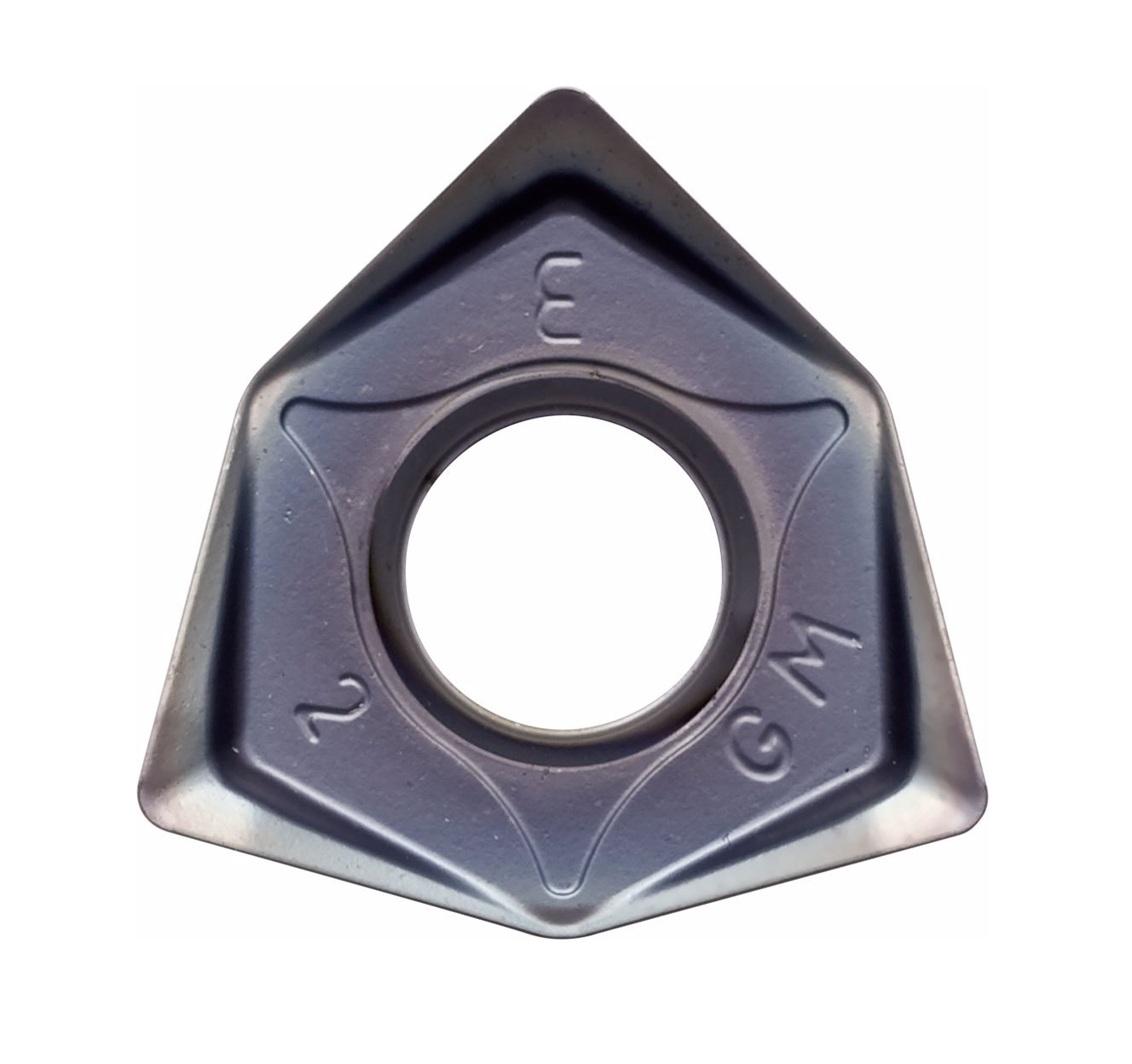
When geometry and coating work together
The best results are achieved not by choosing the best geometry OR the best coating, but by selecting a PAIR that works together perfectly. This synergy between the two elements is the secret of modern CNC milling inserts.
- Example 1: A sharp, positive geometry for aluminum requires an ultra-smooth PVD coating, such as TiN or DLC, that prevents material from adhering to the cutting edge.
- Example 2: A strong, negative geometry for roughing cast iron combined with a thick, multilayer CVD coating will create a tool resistant to extreme temperatures and abrasion.
Theoretical considerations are perfectly reflected in the technologies of leading manufacturers. An excellent example is Kyocera tools, from a Japanese brand known for innovation. This manufacturer has developed unique, multilayer PVD coatings, such as the MEGACOAT NANO series, which combine exceptional hardness and oxidation resistance. Combined with specialized chipbreaker geometries, Kyocera tools deliver outstanding performance and stability, especially in demanding applications. Technar.pl offers a wide selection of these solutions to help optimize every machining process.
Summary
Conscious selection of milling inserts is not a cost, but an investment. Understanding how geometry and coating influence each other and the entire cutting process enables informed decisions. These decisions lead to shorter cycle times, longer tool life, and better part quality, the foundations of competitive and modern production.