




Blog
Turning tools in CNC machining - a short guide
Modern machining on CNC machines places extremely high demands on manufacturers: not only precision and repeatability matter, but above all efficiency and minimized downtime. In the turning process, the key to achieving these goals is selecting the right cutting tools, and among them turning tools play a fundamental role. The success of the entire process depends on their quality, geometry, and fit to the material. In this article, we take a closer look at the world of these essential CNC tools.
At Technar, we specialize in supplying complete solutions for machining. Our offer includes not only high-class turning tools and replaceable inserts from renowned brands, but also thousands of other CNC tools, machine tooling, and professional coolants. Contact our technical advisors.
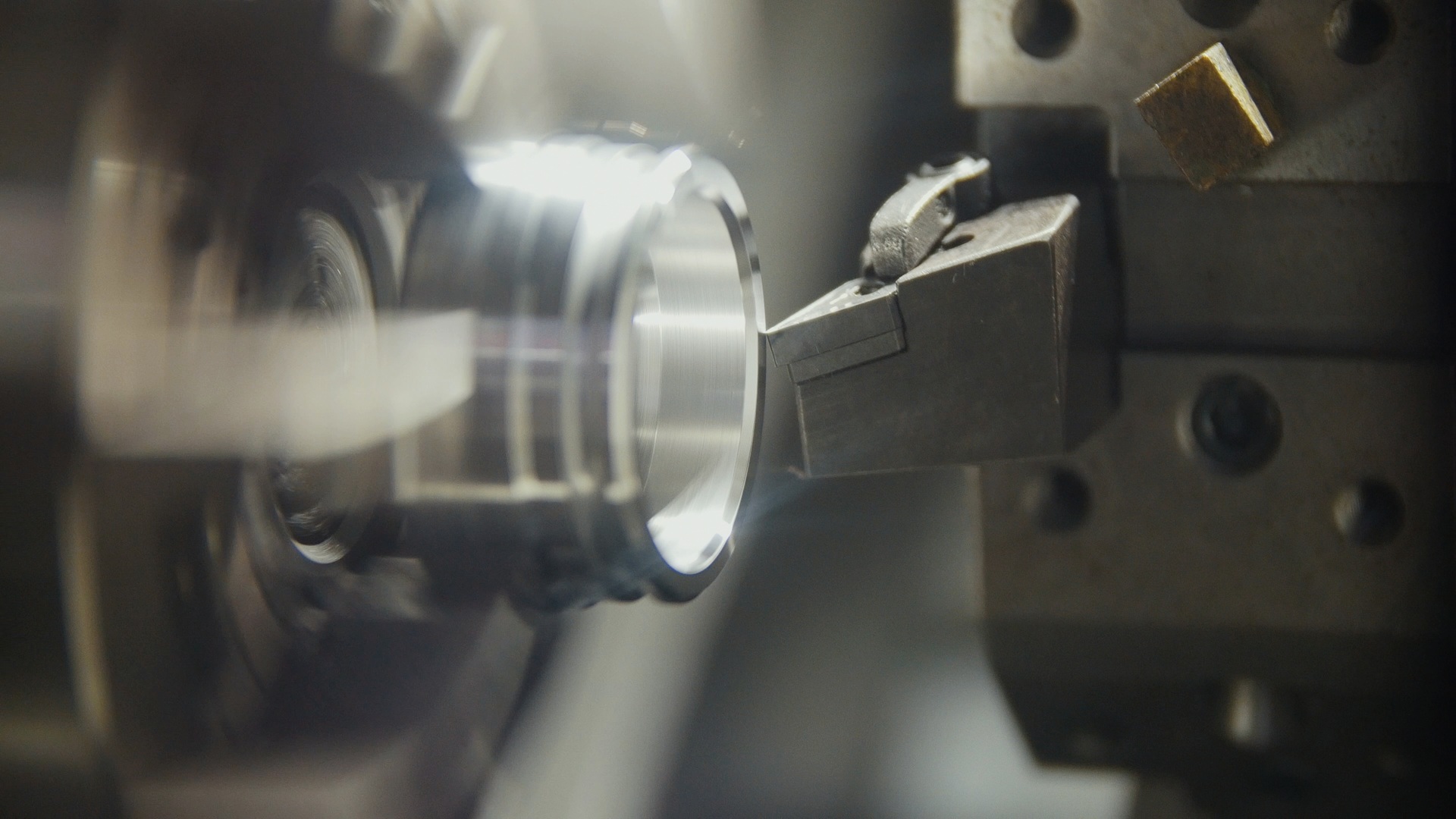
Types of turning tools
The classification of turning tools is broad, but from the perspective of a CNC machine operator, the most important division is functional, that is, by application. Each operation requires a different tool geometry.
Basic division of tools by operation type:
- Longitudinal turning tools (roughing and finishing tools): The most popular group, used for machining the external diameters of a part. They are divided into roughing tools (fast removal of a large allowance) and finishing tools (achieving the final dimension and a smooth surface).
- Facing tools: Used for machining the face of a part.
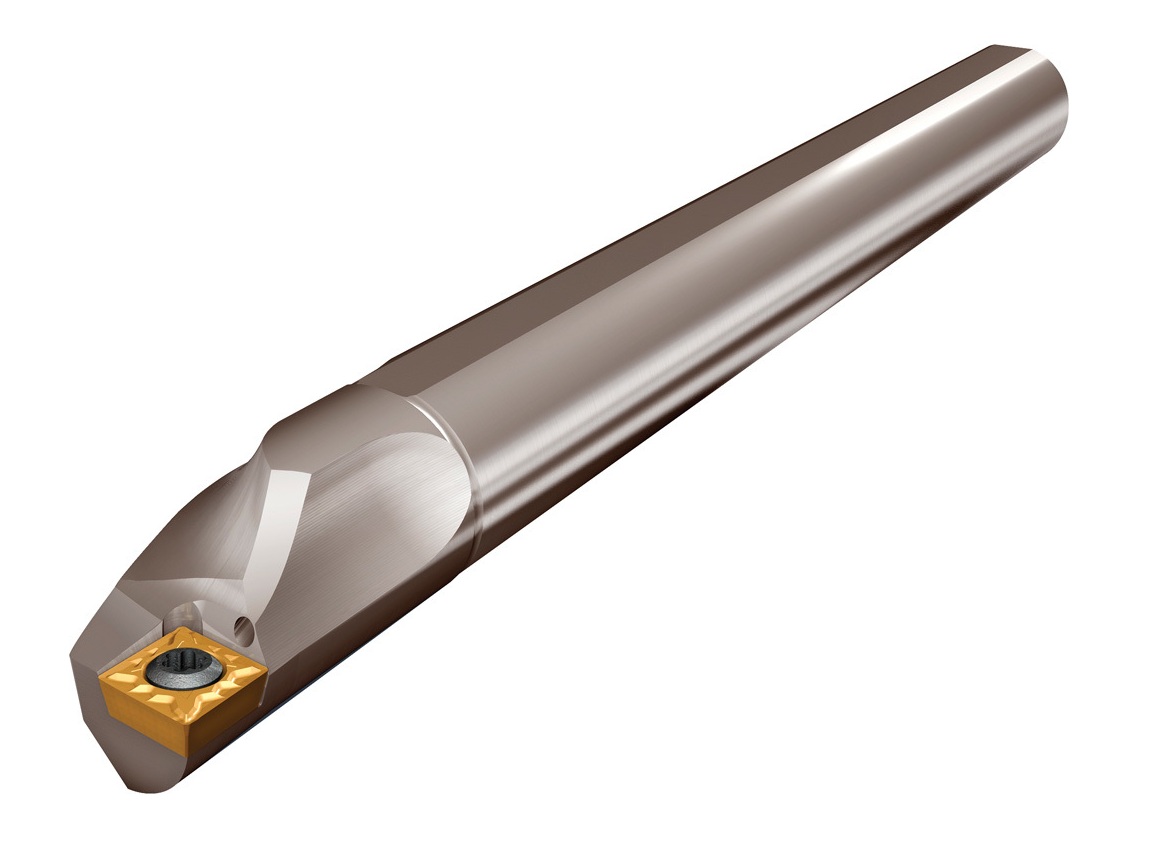
- Boring bars (internal turning tools): Essential for hole machining - enlarging their diameter, facing the bottom, or making internal grooves.
- Grooving tools and parting tools: Specialist tools with a precisely defined width, used for making grooves (for example, for retaining rings) or for cutting off the finished part from the bar.
- Threading tools: As the name suggests, they are used for cutting external and internal threads with different profiles and pitches.
Construction of a turning tool
For a turning tool to work effectively, its design must ensure rigidity, precise mounting, and effective cutting. Regardless of the type, every tool consists of two basic parts:
- Shank (holder): This is the gripping part, responsible for stable and accurate mounting of the tool in the turret head or lathe tool post. Its cross-section (e.g. square, rectangular) and dimensions must be perfectly matched to the machine socket.
- Working part: This is the tool head, which directly machines the material. And here we come to the key design distinction:
- Brazed tools: (Often referred to as monolithic or older-type tools) They have a carbide insert permanently brazed in place.
- Indexable tools: They have a precisely made seat in which a replaceable turning insert is mounted using a lever, clamp, or screw system.
Today, in industry and on CNC machines, the second solution is almost exclusively dominant.
Indexable turning tools and their technological advantage
Modern, efficient CNC machining would not exist without indexable turning tools. Their phenomenon lies not only in the simple possibility of replacing the insert, but in the advanced technology behind it.
It is replaceable inserts that have become carriers of innovation. Manufacturers such as Kyocera offer hundreds of insert variants that differ in three key features:
- Material grade: It is no longer just "carbide". These are advanced mixtures of cemented carbides, cermets, ceramics, or cubic boron nitride (CBN) for hardened materials.
- Coating: Modern multilayer coatings (PVD, CVD) drastically increase resistance to wear and temperature, allowing cutting at many times higher speeds than uncoated tools.
- Geometry (chipbreaker): The rake shape of the insert is computer-designed to form the chip ideally (for example, curl it into short spirals), depending on the material being machined (stainless steel, aluminum, cast iron) and the type of machining (roughing, finishing).
Thanks to this, indexable turning tools offer flexibility unattainable for brazed tools. Instead of replacing the entire tool, the operator can change only the insert within several dozen seconds to adapt the tool to machining a completely different material, while maintaining perfect setup repeatability.
What criteria should be considered when selecting a tool?
Choosing the right CNC tool for turning is a decision that affects the entire process. To make the optimal choice, you should analyze:
- Machined material: This determines which insert grade and chipbreaker geometry should be used.
- Operation type: Roughing requires maximum edge strength, while finishing requires geometry that ensures low cutting resistance and high surface quality.
- System stability: The rigidity of the machine, the way the part and the tool itself are clamped, has a key impact on the risk of vibration. Sometimes it is necessary to use tools with a more positive geometry.
- Part shape: The tool must have access to all machined surfaces without the risk of the shank colliding with the part or chuck.
Summary
Turning tools are the backbone of efficient turning. The development of indexable turning tool technology has redefined the possibilities of machining on CNC machines.