




Blog
Finish Milling Cutters vs Reamers: Which CNC Tools Should You Choose for Precision Diameter Calibration?
Machining precision holes to tolerances around H7 or tighter is an everyday task in production plants focused on the highest quality. When a strict dimension appears on the technical drawing and surface roughness (Ra) must be close to a mirror finish, operators face a classic dilemma: use circular interpolation with a milling cutter or choose a dedicated reamer?
Selecting the right hole machining strategy can be challenging. Check the range of specialist tools at Technar.pl and consult our technical advisors to choose tools that will maximize the efficiency of your machine park.
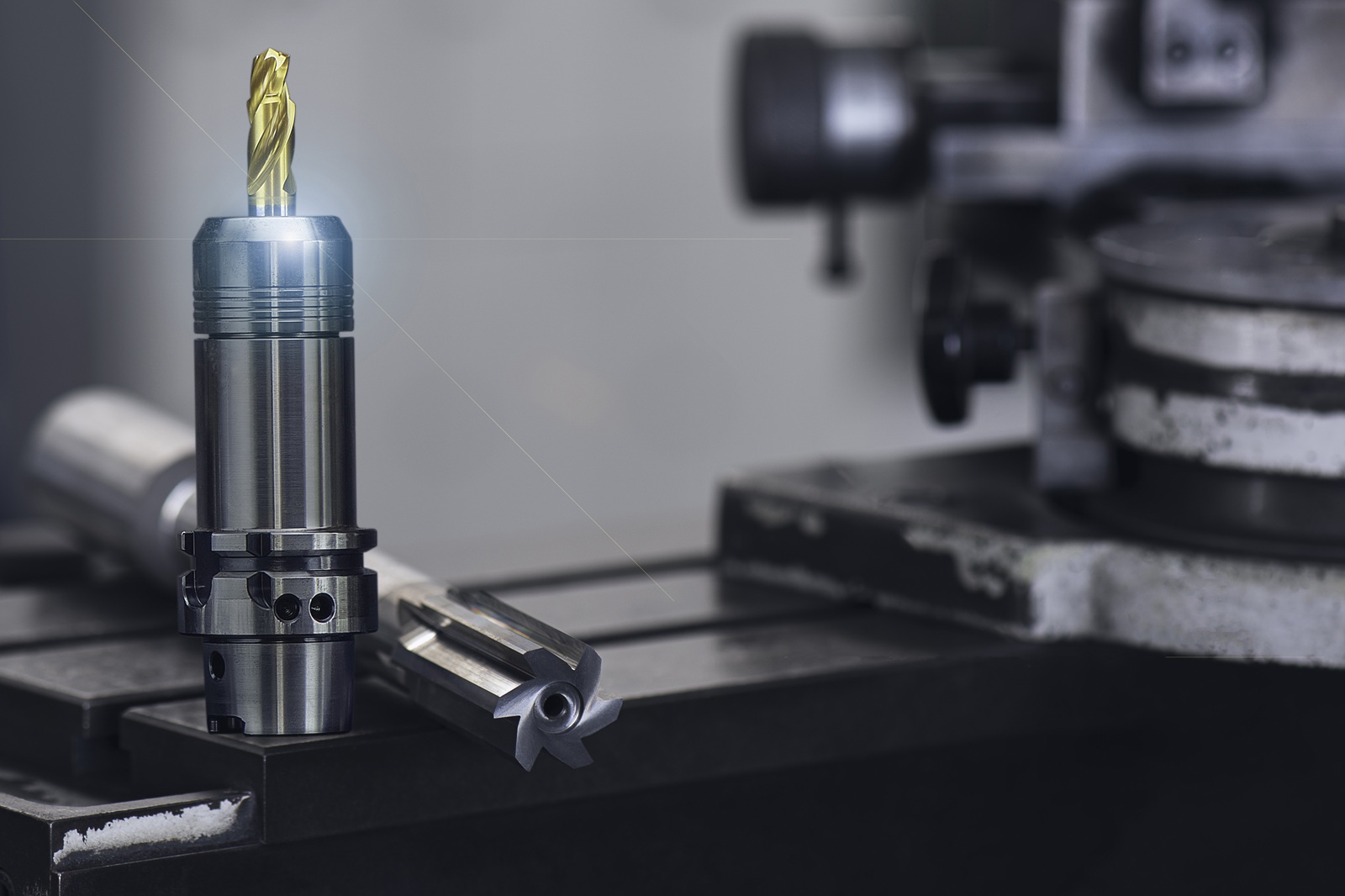
CNC Reamers - Uncompromising Precision and Speed in Series Production
A reamer is a tool created for one specific task: final finishing of a cylindrical hole. In series production, reamers are often unrivaled.
Advantages of reaming:
- Cycle time: A reamer works along the hole axis (up-and-down movement), which means calibration takes a fraction of the time needed for helical milling.
- Repeatability and surface quality: The multi-flute design of a reamer guarantees exceptional smoothness and perfect cylindricity.
- Tool life: Because of the minimal material allowance that the reamer removes from the edge, this tool wears very slowly.
What should you keep in mind?
A reamer does not forgive mistakes at the preparation stage. Before you introduce it into the material, the base hole must be perfectly prepared. High-class CNC drills are crucial here, as they ensure axial alignment and the proper allowance. If the drill "walks" off axis, the reamer will simply copy that error. This tool also has a fixed diameter, so you cannot correct the radius from the machine controller.
Finish Milling Cutters - Flexibility and Dimensional Control
Circular interpolation using solid milling cutters is a completely different working philosophy. Instead of a dedicated tool dimension, we use the movement of the machine axes.
Advantages of calibration with a milling cutter:
- Full control from the control panel: Is the tool wearing? Is the dimension "drifting" by one hundredth of a millimeter? Simply change the offset in the CNC control and continue working.
- Versatility: With one milling cutter, for example 10 mm in diameter, you can finish holes with diameters of 12 mm, 15 mm, or 20 mm. This is an ideal solution for one-off and prototype production.
- Correction of drilling errors: Unlike a reamer, a milling cutter can correct slight axial "runout" left by a drill. However, this requires top-class milling cutters with high rigidity.
Challenges in milling:
Helical milling takes significantly more machine time. In addition, with deep holes there is a risk of tool deflection, the so-called taper effect, which forces the use of additional spring passes and extends cycle time. If process stability matters to you, it is worth reaching for proven premium solutions such as Kyocera tools, which feature advanced geometry that minimizes cutting resistance.
Comparison: What Will Work in Your Process?
To make the decision easier, we have prepared a short comparison table:
| Process Feature | Choice: Finish Milling Cutter | Choice: Reamer |
|---|---|---|
| Batch size | One-off / Prototypes | Medium and high-volume production |
| Cycle time | Long (requires interpolation) | Short (fast axial feed) |
| Dimensional correction | Easy (from the machine level) | None (requires tool replacement) |
| Initial cost | Lower (universal application) | Higher (tool for a specific dimension) |
The Basis of Success: System Stability
It is worth remembering that regardless of whether you choose milling or reaming, the final result depends on the rigidity of the entire system. A poor holder, a spindle with runout, or insufficient cooling will waste the potential of even the most expensive tool.
This rule applies to all metal machining processes, exactly as it does on lathes, where rigid turning tools determine the roughness of the shaft; in milling centers, stable shrink-fit or hydraulic holders ensure the proper operation of reamers and milling cutters.
All cutting tools have a defined tool life and optimal working parameters. Remember that before attempting to achieve an H7 tolerance, you should make sure your coolant is properly concentrated and that runout on the holder does not exceed the permissible microns.