




Blog
ER holder vs Hydrochuck: which provides greater accuracy in CNC machining?
In modern CNC machining, not only the quality of cutting tools plays a huge role, but also the way they are clamped. Even the best milling cutter, drill or reamer will not work properly if it is mounted in the wrong tool holder.
Two popular solutions used in machining centers are ER holders with a collet and Hydrochuck hydraulic holders. Both systems have their advantages and applications, but they differ in terms of accuracy, stability and vibration damping.
We offer cutting tools and CNC tooling matched to the needs of production at different scales. Feel free to contact us.
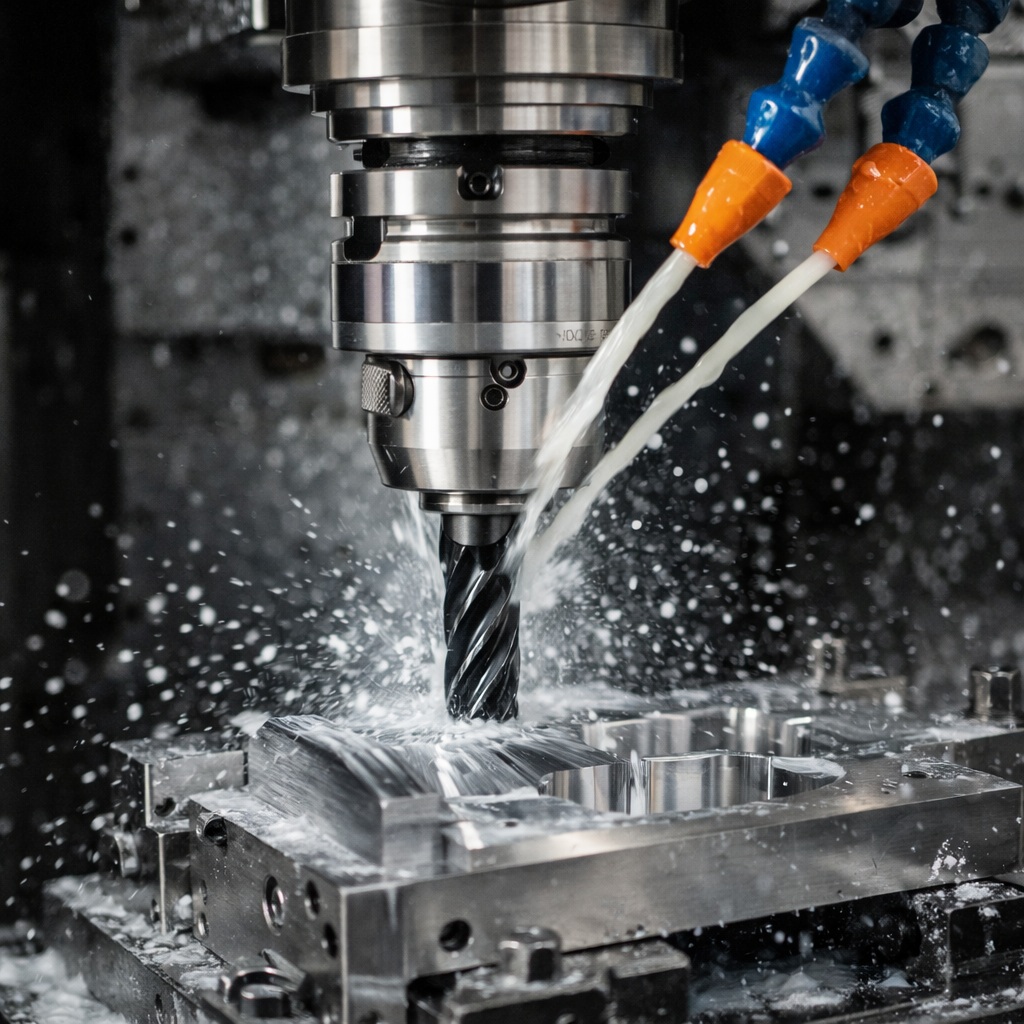
Why is the tool clamping method so important?
In the machining process, the stability of the entire technological system plays a key role. In practice, this means the cooperation of several elements:
- CNC machine tool
- tool holder
- cutting tool
- machined part
If one of these elements introduces vibration or radial runout, it can lead to many technological problems:
- deteriorated surface quality
- faster tool wear
- cutting process instability
- self-excited vibration (chatter)
- reduced dimensional accuracy
That is why proper selection of the tool holder has a direct impact on production efficiency and tooling costs.
ER holder: the most popular tool clamping system
The ER collet system is one of the most widespread solutions in CNC machining. ER holders are used both in CNC milling machines and in many other machine tools.
The holder design is based on an ER collet, which clamps evenly on the tool shank after the nut is tightened.
Advantages of ER holders
- very high versatility of use
- wide clamping range (the collet usually allows a tolerance of up to 1 mm, which makes it easier to clamp non-standard tools)
- relatively low price
- high availability of collets
- common standard and ease of use
Thanks to these properties, ER holders are often used in production workshops as well as in one-off and small-batch production.
Accuracy of ER holders
Clamping accuracy in ER holders depends on several factors:
- holder quality
- collet quality
- proper tool installation and nut tightening torque
- cleanliness of contact surfaces
Typical radial runout for ER holders is usually from 5 to 10 micrometers. In many applications this is fully sufficient, but in precision operations it can affect machining quality.
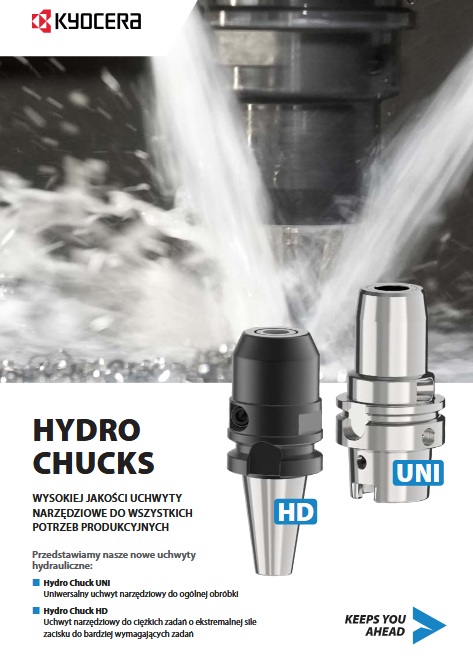
Hydrochuck: a hydraulic holder for precision machining
Hydrochuck is a modern tool holder used in demanding CNC machining processes. Its operation is based on a hydraulic chamber filled with fluid.
After tightening the clamping screw, the fluid applies even pressure to the clamping sleeve, which grips the tool around its entire circumference. It is worth noting that, unlike ER holders, this mechanism requires tools with very strict shank tolerance (most often h6 class). However, special reduction sleeves can be used, allowing tools with smaller diameters to be clamped in the same holder.
Advantages of Hydrochuck holders
- very high clamping accuracy
- radial runout even below 3 µm
- excellent vibration damping
- very stable tool guidance
- extremely fast tool change (only requires turning one screw until it stops)
- extended life of milling cutters and drills
Thanks to this, Hydrochuck is often used in finishing and in the production of parts requiring very high accuracy.
ER holder vs Hydrochuck: comparison
| Feature | ER holder | Hydrochuck |
|---|---|---|
| Radial runout | 5–10 µm | 1–3 µm |
| Vibration damping | medium | very good |
| Tool change speed | requires wrenches / assembly stand | very fast (one hex socket screw) |
| Tool shank requirements | flexible (clamping range up to approx. 1 mm) | very strict (usually h6 tolerance) |
| Versatility | very high | limited (can be supplemented with reduction sleeves) |
| Price | low | higher |
| Application | general machining | precision machining |
When should you choose an ER holder?
ER holders work best in situations where production versatility and flexibility are key.
They are most often used in:
- light and medium roughing (in very heavy HPC machining there is a risk of the so-called "pull-out" of the milling cutter from the holder)
- one-off production
- small and medium-sized workshops
- general milling operations
Their major advantage is the ability to use many tool diameters with one holder and to tolerate minor deviations in tool shank diameter.
When is Hydrochuck the better choice?
Hydrochuck hydraulic holders are the best solution where maximum stability, cutting process accuracy and repeatability matter.
They are most often used in:
- finishing
- precision milling
- drilling requiring high coaxiality
- machining difficult-to-cut materials
- series production requiring repeatability and fast tool changes
Impact of the holder on CNC tool life
One of the most frequently overlooked aspects is the impact of the tool holder on cutting tool life. Holders with high accuracy and good vibration damping capability significantly reduce the load on the cutting edge.
In practice, this means:
- longer life of milling cutters
- lower risk of insert chipping
- better part surface quality
- a more stable machining process
Summary: which holder provides greater accuracy?
If the main criterion is tool clamping accuracy, the clearly better solution is Hydrochuck. Hydraulic holders provide very low radial runout, excellent vibration damping and cutting process stability.
In turn, ER holders remain a very good and universal solution in many production applications, especially where flexibility, a wide clamping range and lower tooling cost are important.
In practice, many production plants use both solutions in parallel: ER holders for general operations and Hydrochuck for precision machining and finishing.
FAQ: frequently asked questions
Is Hydrochuck more accurate than an ER holder?
Yes. Hydrochuck hydraulic holders offer significantly lower radial runout, often below 3 µm, which translates into higher machining accuracy.
Are ER holders suitable for precision milling?
Yes, but their accuracy is lower than that of hydraulic holders. In many general applications they are fully sufficient, but hydraulic systems are recommended for tight tolerances.
Does Hydrochuck extend tool life?
Yes. Thanks to better vibration damping and stable tool clamping, it can significantly extend the life of milling cutters and drills.