




Blog
Dynamic (trochoidal) milling - how to extend the life of solid carbide milling cutters?
In the world of CNC machining, there is a common belief that to work faster you need to "push" the machine harder, which usually ends with faster tool wear. But is it possible to increase material removal rate (MRR) while making the milling cutter work several times longer? The answer is to change the strategy to dynamic milling (High Efficiency Milling - HEM) and trochoidal toolpaths.
If you are wondering which CNC tools from our range will work best with your material, contact Technar's technical advisors. We will help you select a tool that will change your production.
What is dynamic milling?
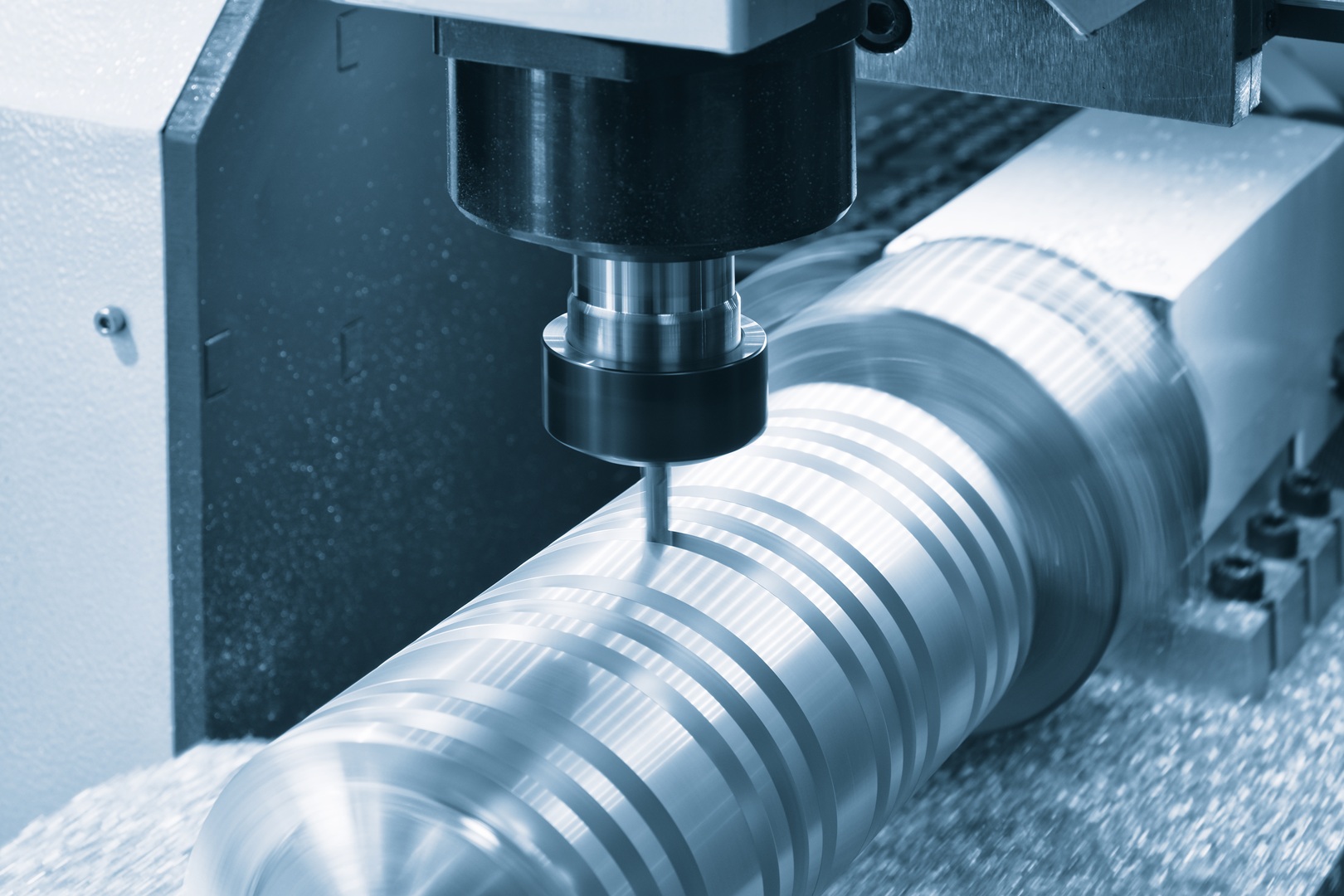
A traditional roughing strategy usually relies on high tool diameter engagement (large $a_e$ - cutting width) with relatively shallow depth ($a_p$). This means that only the tip of the milling cutter is working, usually the lower 3-5 mm. This wastes the potential of an expensive carbide tool.
Dynamic milling reverses these proportions:
- Small $a_e$ (cutting width): The tool removes material with a small segment of its diameter (usually from 5% to 15% of the milling cutter diameter).
- Large $a_p$ (cutting depth): We use the entire length of the cutting edge, plunging to 2xD, 3xD, or even 4xD (multiples of the diameter).
- Constant chip thickness: CAM software generates a toolpath so that the tool engagement angle remains constant, eliminating sudden load spikes.
Trochoidal milling - swirling toolpaths
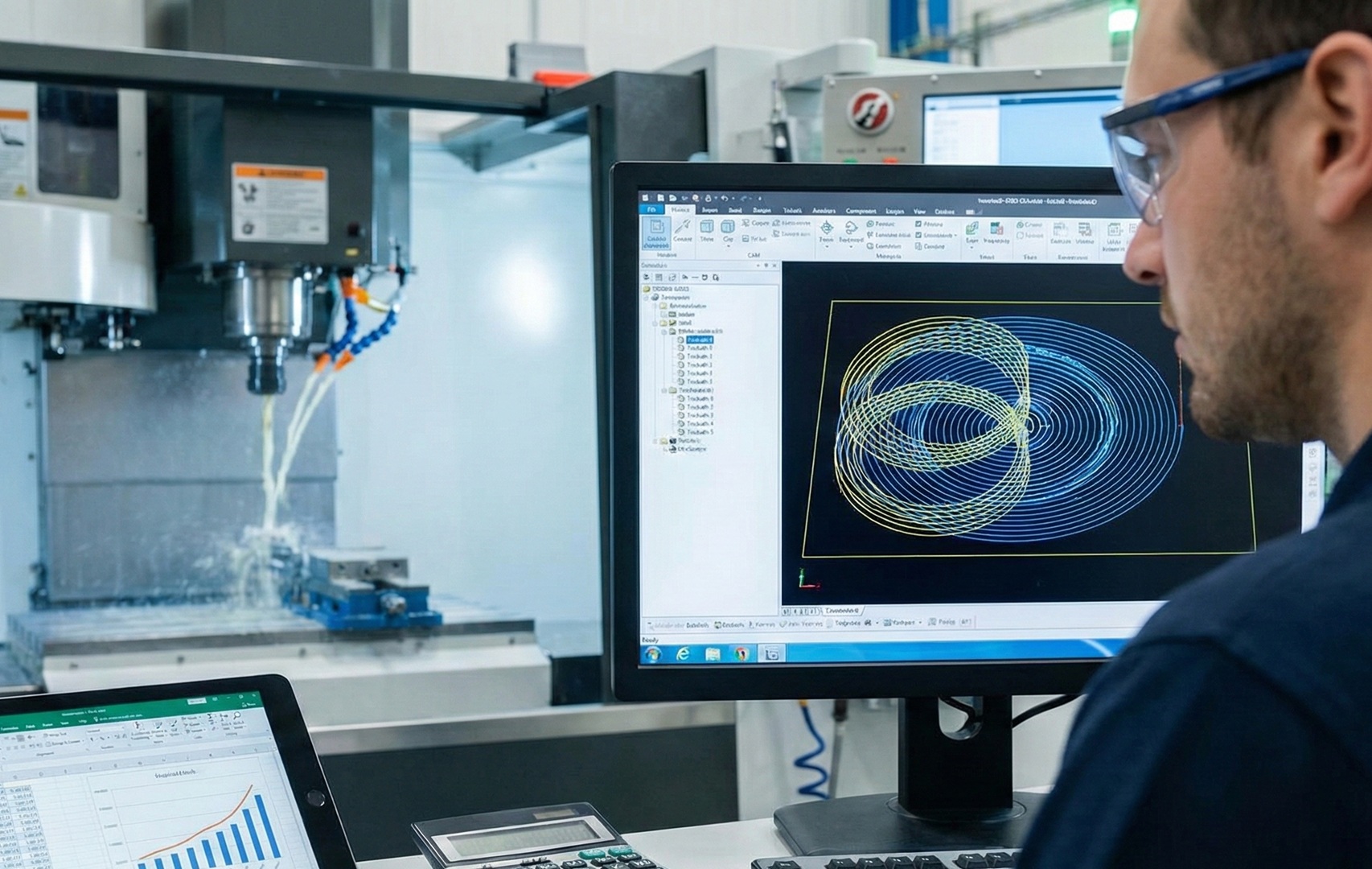
A subset of dynamic machining is trochoidal milling. It is most often used when making channels (slots) wider than the tool diameter. The milling cutter does not move in a straight line, but performs circular (spiral) movements, smoothly "biting" into the material.
This helps avoid the critical moment when the milling cutter enters full material (slotting), which in the traditional method often leads to vibrations and tool breakage.
Why does this method extend the life of CNC tools?
It might seem that working at full depth and high feeds will destroy the tool. However, the physics of the process show something completely different. Here are 4 reasons why your CNC tools will "breathe a sigh of relief":
1. Even wear of the cutting edge
Instead of dulling only the tip of the milling cutter, you distribute cutting forces along the entire length of the edge. As a result, the tool wears more slowly and more predictably. One solid carbide milling cutter can remove much more material before it goes for regrinding or scrap.
2. Heat evacuation (the most important point!)
In traditional machining, the tool often "suffocates" in the material, generating enormous temperature. In dynamic milling, thanks to the small engagement angle, the edge is in contact with the material for a very short time, and for the rest of the rotation it "rests" and cools in the air or coolant.
Moreover, at the right speed, most of the heat is carried away with the chip rather than absorbed by the tool or the part. This is crucial when machining difficult-to-machine materials such as stainless steels or superalloys.
3. Lower radial forces
Small $a_e$ means lower forces pushing the tool away from the material. This allows the use of long tools and work on slender parts or weaker spindles without the risk of falling into vibration.
Which solid carbide milling cutters should you choose for HSM?
Not every tool will work in this strategy. For dynamic milling to be effective, you need milling cutters with specific geometry. It is worth paying attention to:
- Variable helix: Uneven spacing of chip flutes perfectly dampens harmonic vibrations, which is crucial at high rotational speeds.
- Tool core: Milling cutters for dynamic machining should have a reinforced core to withstand bending forces when working at large depth ($a_p$).
- Chip evacuation: With such high productivity, the amount of chips is enormous. It is worth using milling cutters with polished flutes and internal cooling systems if the machine allows it.
- Number of cutting edges: For steel and hard materials, 5-flute or even 7-flute milling cutters work very well, allowing very high feed rates per minute.
Summary: Is it worth it?
Implementing trochoidal and dynamic strategies requires a change in mindset and good CAM software. However, the benefits are undeniable:
- Shorter cycle time (even by 50-70%).
- Longer tool life (often threefold).
- Lower load on the machine spindle.