




Blog
Driven and Angle Tool Holders: What Is Worth Knowing?
In the world of modern CNC machining, precision and efficiency are essential. As parts become more complex and production requirements increase, there is a need for tools that go beyond the standard capabilities of lathes and milling centers. This is where driven and angle tool holders come in, expanding the machine's range of capabilities and significantly increasing machining flexibility.
Our range includes tool holders and other CNC tooling from renowned manufacturers, valued for reliability and precision workmanship. We help select the right solutions for a specific machine and type of machining - please contact us.
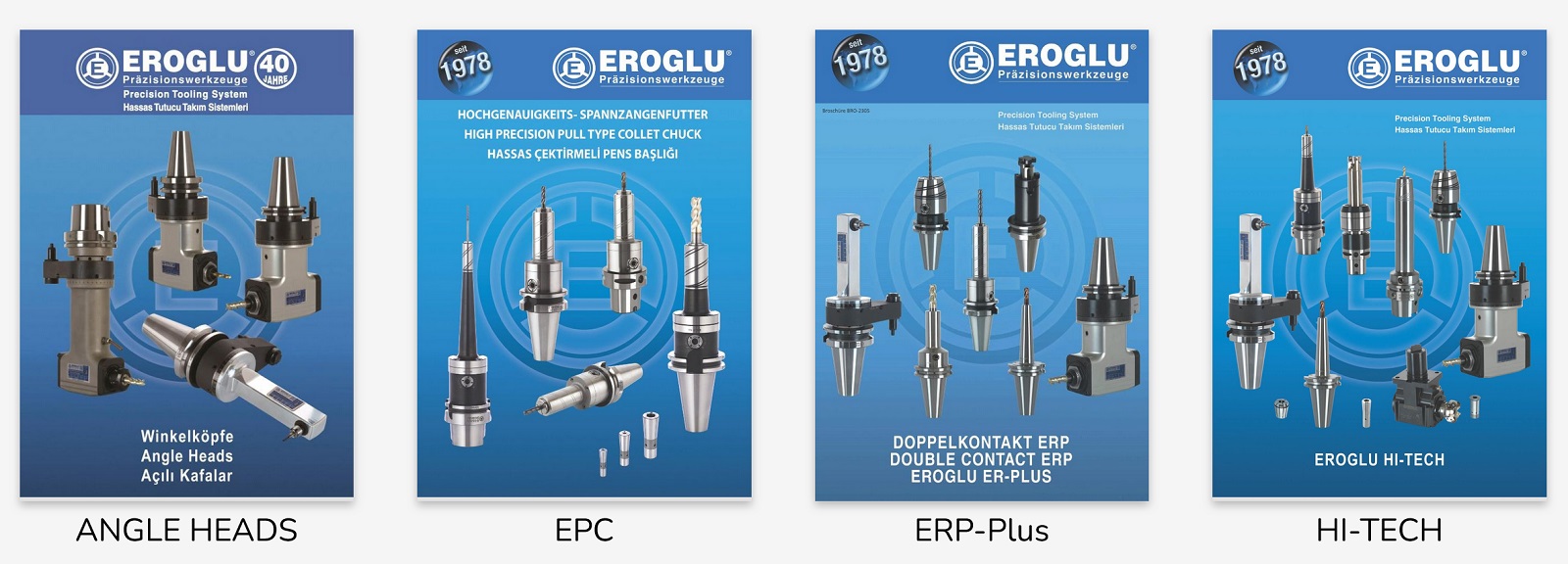
What are driven tool holders?
Driven tool holders (live tools) are tools mounted on the turret of a CNC lathe that, unlike conventional static holders, have their own drive. As a result, CNC tools mounted in the holder can rotate, allowing operations such as:
- drilling radial and axial holes,
- milling grooves,
- threading.
In practice, this means that a lathe can partly perform operations typical of a milling machine without the need to transfer the part to another station.
What are angle tool holders?
Angle tool holders (angular heads) are holders that make it possible to transfer tool rotation at an angle, usually 90 degrees relative to the spindle axis. This type of CNC tooling is most often used in milling centers when:
- machining must be performed on a side surface without repositioning the part,
- the machine does not have rotary axes,
- parts are difficult to clamp or very large.
An angle tool holder allows the spindle to be "turned" where the machine itself cannot reach, enabling machining of hard-to-access areas without changing the part setup.
Practical applications
- Multi-sided machining in a single setup
- Production of parts with complex geometry
- Automation and unattended operation
Advantages of driven and angle tool holders
- Increased machine flexibility
- Reduced machining time and number of changeovers
- Better quality by limiting setup errors
- Ability to machine parts that previously required several machines

What should you pay attention to?
- Precise holder setup, especially for angle holders
- Selection of appropriate cooling, as driven holders may require through-spindle coolant
- Regular maintenance, because the drive transmission mechanism requires servicing
- Machine compatibility, including mounting type, drive type, and speeds
Summary
Both driven and angle tool holders are tools that can radically change the capabilities of a CNC machine. They make it possible to expand the range of operations, increase efficiency, and shorten production time. For many companies, this is a step toward more advanced, automated, and precise machining.