




Blog
Parting and grooving on a lathe - how to do it safely and avoid breaking inserts?
Parting off a finished component is often the last and most stressful operation in the turning process. A moment of inattention, poor chip evacuation, or a minimal setup error is enough to crack the tool and, in the worst case, damage an almost finished part. Why are parting tools and grooving tools so sensitive to mistakes?
We often blame carbide quality for failures, while the real problem lies in the technique or in the selection of tooling. In this guide, we explain how to choose turning tools for these operations and what to pay attention to when setting up the machine so the process is stable and repeatable.
Check our offer and choose CNC tools from renowned manufacturers such as Kyocera or Osawa, which can handle any material. We invite you to contact our specialists.
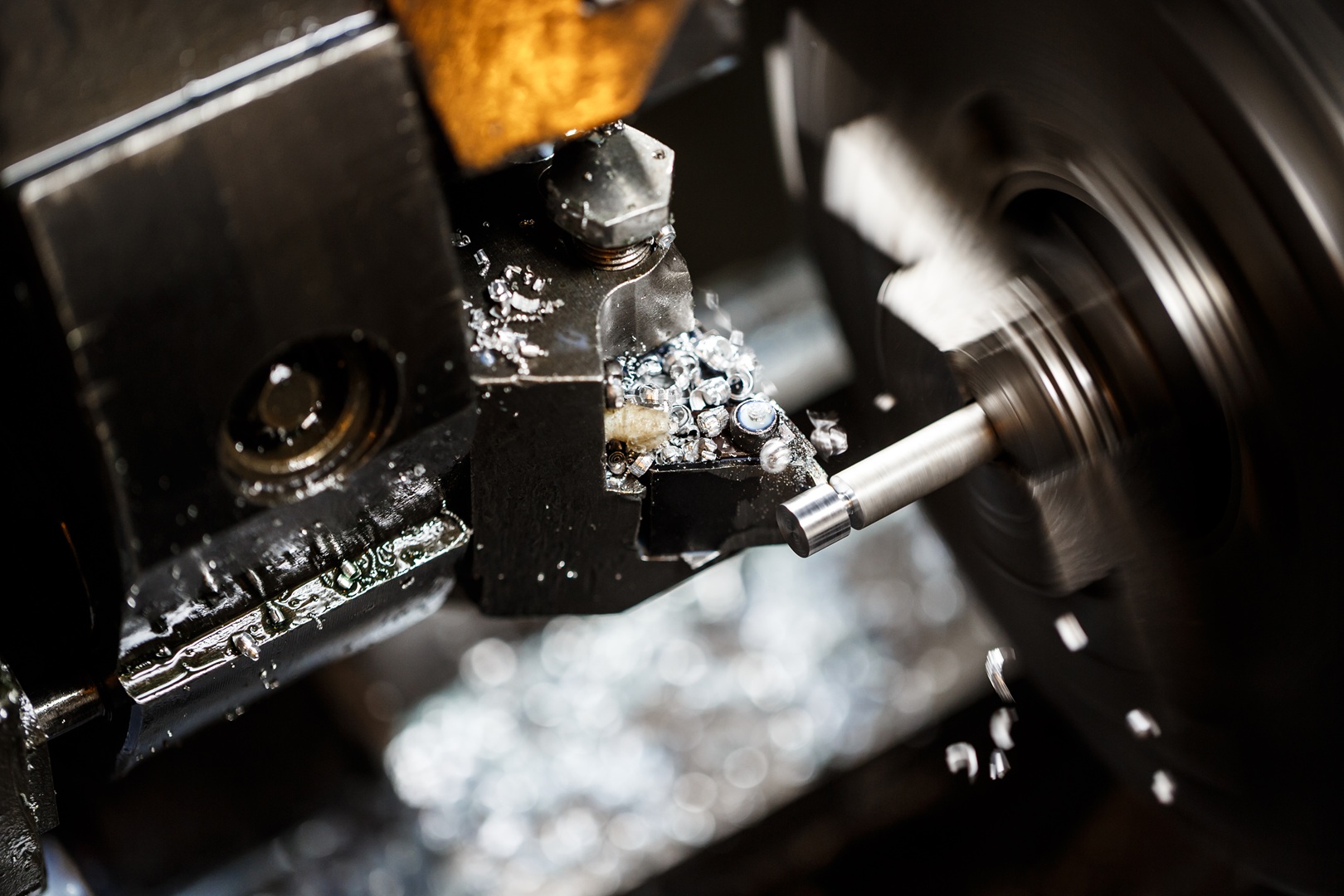
1. Cutting edge height matters. Why does +/-0.1 mm determine success?
Unlike longitudinal turning, where minor height deviations can be corrected, in grooving the forces act in a way that does not forgive errors. Parting turning tools must be set exactly on the spindle axis or slightly above it. However, the error margin depends drastically on the diameter being machined:
- Large diameters (>80 mm): The tolerance is somewhat more "forgiving".
- Small diameters (10-20 mm): Even a 0.05 mm deviation changes the cutting geometry enough to damage the insert. The smaller the part, the more precise the setting must be.
Remember: Setting the tool below the axis causes the insert to be "pulled" under the material and leaves a large pip on the part. Setting it too high causes the flank face to rub against the material and creates vibrations.
2. Parting inserts: single-ended or double-ended?
When choosing parting inserts, we often follow economics. However, it is worth knowing that the number of cutting edges affects tool rigidity.
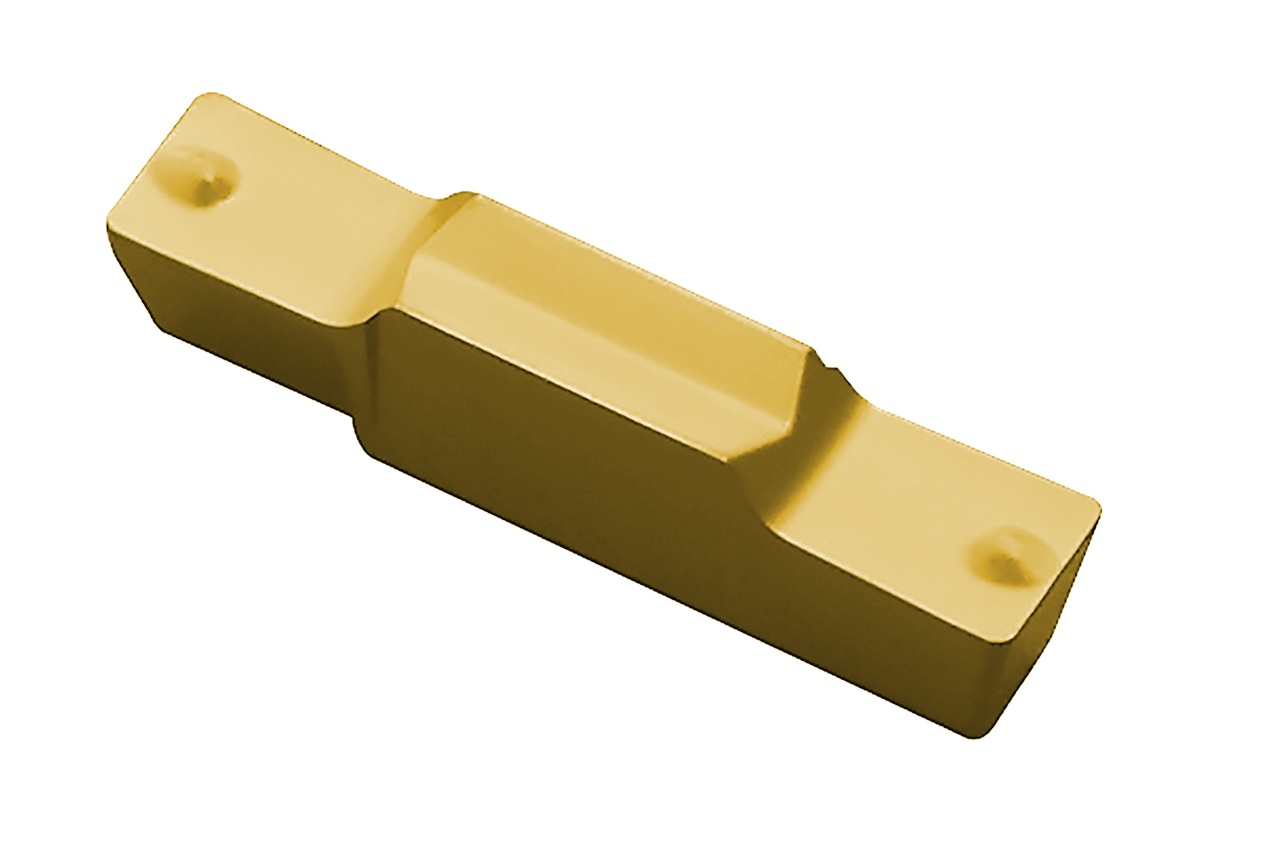
Double-ended inserts (Economy)
This is the most cost-effective solution - you pay for one insert and get two corners. They are excellent for shallower grooves. However, remember that because of their design, they often have lower lateral rigidity and are more susceptible to deflection at high feeds than their single-ended counterparts.
Single-ended inserts (Stability and depth)
Essential for deep parting and work with large shafts. Their design (often "dog bone" type) provides better support in the seat and allows deeper penetration into the material without the risk of collision with the rear part of the tool.
3. Cutting parameters: feed is the key to durability
Selecting the cutting speed (Vc) is one thing, but in parting it is the feed (fn) that determines whether the chip will curl correctly or jam in the groove.
- Feed too low: The chip is too thin, does not break, and forms long ribbons ("whiskers") that clog the groove. In addition, the cutting edge only "rubs" the material instead of cutting it, which leads to temperature rise and faster wear.
- Feed too high: Generates excessive cutting forces, vibrations, and the risk of sudden insert breakage.
Approximate feed ranges:
- Parting: 0.04 - 0.12 mm/rev
- Grooving: 0.03 - 0.10 mm/rev (depending on insert width)
4. Jammed chip and the role of coolant
A groove is a "closed space" from which chips are difficult to remove. If they are "reground" by the cutting edge, the tool will be destroyed. Effective flushing of the chips is crucial.
Modern CNC tools increasingly offer internal coolant through the body. However, it is worth knowing that for such a system to work as a "chip breaker" and not only as cooling, the right pressure is required:
- Standard pumps: Often provide too little pressure to push chips out of a deep groove.
- Effective flushing: Usually starts at 20-30 bar.
- High-Pressure (HP) systems: Working at 40-70 bar, they can break chips with fluid pressure alone.
5. Modular vs monolithic systems - what to choose?
When choosing a tool, you encounter two main product groups:
- Monolithic tools: Cheap to start with, good for simple work, but in a collision the entire tool becomes scrap.
- Modular systems (Block + Blade): A solution for professionals. The replaceable blade ensures rigidity and savings - if the seat is damaged, you replace only the inexpensive blade, while the costly block remains.
Summary: Proper selection means lower costs
Parting and grooving does not have to be a lottery. The key is system rigidity, precise height setting (especially for small diameters), and maintaining the right feed to break the chip. Investing in high-quality CNC tools pays off quickly by reducing downtime.