




Blog
Coolant in CNC machining: More than just cooling - functions and importance
Modern CNC machining is a process that requires precision, efficiency, and attention to every detail. Among the many factors that influence the success of a cutting operation, such as tool selection, parameters, or machine stability, an often underestimated role is played by CNC coolant, also called metalworking fluid or cutting fluid. Although its primary function appears to be cooling, in reality its range of action is much broader and is critical to the quality, efficiency, and economics of the entire production process.
If you are choosing the right coolant for your CNC machines or want to optimize production in terms of CNC tools, we invite you to explore Technar's offer and contact our specialists, who will be happy to help select a solution perfectly matched to your needs.
What is coolant in the context of CNC machining?
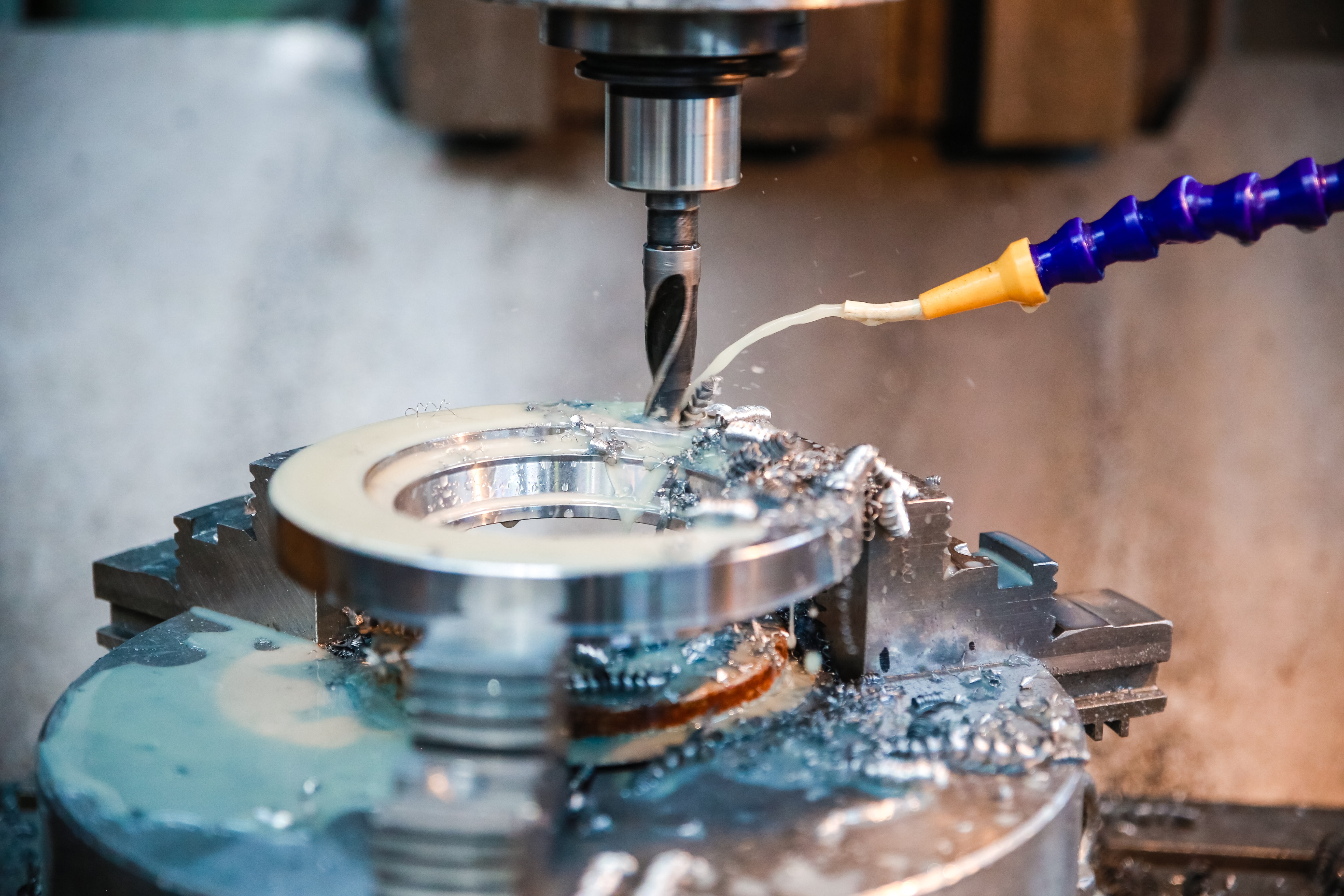
CNC coolant is a specialized fluid used during machining processes such as milling, turning, drilling, and grinding. Its main task is to control the temperature in the contact zone between the cutting tool and the workpiece material. However, as we will see, this role is only one of many that coolant performs in the dynamic environment of a CNC machine.
Key functions of coolant: more than just cooling
To fully understand the importance of metalworking fluids, let us look at their multifaceted functions:
- Cooling: This is the most obvious function. During cutting, enormous amounts of heat are generated, which can lead to tool overheating, faster tool wear, and can also negatively affect the properties of the workpiece material and the dimensional accuracy of the part. Coolant effectively removes this heat, stabilizing the process temperature.
- Lubrication: Metalworking fluid creates a lubricating film between the tool and the chip, and between the tool and the workpiece surface. This reduces friction, resulting in lower cutting forces, less cutting edge wear, and better machined surface quality. Proper lubrication is especially important when machining difficult-to-machine materials.
- Chip evacuation: The coolant stream helps remove chips from the cutting zone. This prevents them from jamming and accumulating around the tool, which could lead to tool damage, deterioration of surface quality, or even interruption of the machining process. A clean working zone is the basis of stable and safe cutting.
- Corrosion protection: Many coolants, especially water-based emulsions, contain corrosion inhibitors. They protect both machined parts and CNC machine components from rust formation. This is particularly important for corrosion-prone materials and longer production cycles.
- Improved surface quality: Thanks to the synergy of cooling and lubricating action, as well as efficient chip removal, coolant directly influences the achievement of a smoother and more uniform workpiece surface. It minimizes the risk of built-up edge, burns, and microcracks.
- Cleaning properties: Coolant helps keep CNC tools, holders, and the machining zone itself clean by flushing away fine swarf and contamination.
The importance of proper coolant selection and use
Choosing the right CNC coolant and maintaining it correctly have a direct impact on many aspects of production:
- Production costs: Longer tool life, fewer rejects, and higher productivity all translate into real savings.
- Part quality: Stable thermal conditions and proper lubrication guarantee repeatability and high product quality.
- Machine service life: Corrosion protection and lower mechanical loads contribute to longer and trouble-free operation of the machine tool.
- Occupational health and safety: Modern CNC coolants are formulated to minimize negative effects on operators' health, for example through low foaming tendency, antibacterial properties, and reduced oil mist formation.
Regular inspection of coolant parameters, such as concentration, pH, and the presence of contamination, as well as proper maintenance or replacement, is also extremely important.
Types of coolants used in CNC machining
Many types of metalworking fluids are available on the market, and their selection depends on the type of material being machined, the type of cutting operation, and the specific requirements of the process. The main categories are:
- Oil emulsions (water-miscible oils): The most popular and universal; they combine the good cooling properties of water with the lubricating properties of oil.
- Synthetic coolants: Water-based solutions that do not contain mineral oil and are characterized by excellent cooling properties and cleanliness.
- Semi-synthetic coolants: A mixture of emulsions and synthetics that aims to combine the advantages of both groups.
- Cutting oils (neat oils): Pure mineral or synthetic oils used where intensive lubrication is required, for example in thread machining or difficult-to-machine materials.
The MQL (Minimal Quantity Lubrication) technique is also gaining popularity; it involves supplying a minimal amount of lubricant in a compressed air stream.
Summary of coolant functions and their benefits - Table
| Coolant function | Description | Benefits for the CNC process |
|---|---|---|
| Cooling | Removing excess heat from the cutting zone. | Extending tool life, dimensional stability of the part, preventing adverse structural changes in the material, and enabling the use of higher cutting parameters. |
| Lubrication | Reducing friction between the tool, chip, and workpiece by creating a lubricating film. | Lower tool wear (cutting edge and rake face), better machined surface quality, lower cutting forces, and reduced risk of built-up edge formation. |
| Chip evacuation | Removing chips and fine particles from the machining area with a fluid stream. | Maintaining a clean working zone, preventing chip jamming, protecting the tool and part surface from chip damage, and ensuring process continuity. |
| Corrosion protection | Protecting machine components and machined parts against rust and corrosion. | Longer machine service life and efficiency, protection of finished part quality, and lower material losses caused by corrosion. |
| Improved surface quality | Direct impact on the smoothness, uniformity, and finish of the machined component. | Achieving better aesthetic and functional parameters of parts, often eliminating the need for additional finishing operations. |
Summary
As you can see, coolant in CNC machining is much more than just "water for cooling". It is a multifunctional process fluid that plays an essential role in optimizing cutting processes, influencing productivity, quality, costs, and the durability of both tools and machines. Informed selection of the right coolant type and care for its technical condition is an investment that quickly pays off.