




Blog
Coolant for aluminum machining - how to avoid stains on the part and corrosion?
Aluminum machining seems like an easy and pleasant process: the material is soft, the chip usually breaks cleanly, and cutting speeds can be high. However, this metal has its "dark side". Many operators have encountered a situation where a perfectly made part, after washing, turns out to be dull, covered with gray stains or, worse, spots of corrosion. The key to success here is not only the geometry of the milling cutter, but above all chemistry, meaning a properly selected coolant for aluminum.
Remember: Selecting the right coolant is cheaper than a batch of ruined parts. If you are unsure whether your current coolant is sufficient, contact us.
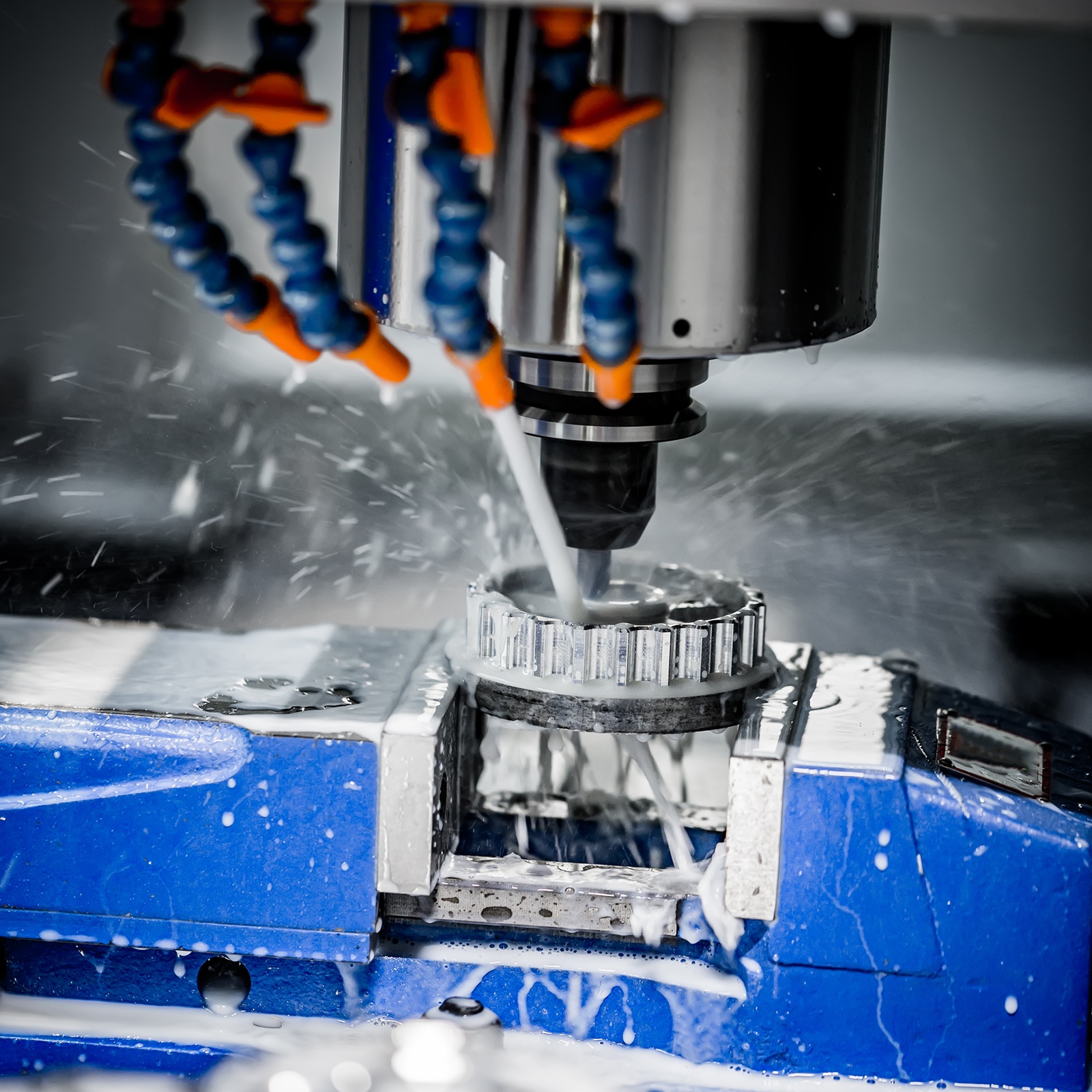
Why is aluminum so sensitive to coolant?
Aluminum is an amphoteric metal. This means it reacts chemically with both acids and bases. In its natural environment, aluminum protects itself by forming a thin oxide layer (passivation). However, during machining, a milling cutter or turning tool constantly tears away this protective layer, exposing "live", highly reactive metal.
This is where the problems begin. Most coolants for CNC machine tools are alkaline (pH above 8.5-9.0) to prevent corrosion of machine components made of cast iron and steel and to inhibit bacterial growth.
For aluminum, excessively high pH (above 9.2-9.5) is disastrous. Instead of cooling, the emulsion begins to etch the surface of the part. Aerospace and high-strength alloys are particularly vulnerable:
- 2000 series (Al-Cu): The addition of copper makes these alloys highly susceptible to galvanic corrosion in an aqueous environment.
- 7000 series (Al-Zn): High zinc content also reduces the alloy's chemical resistance.
Stains on aluminum (staining) - where do they come from?
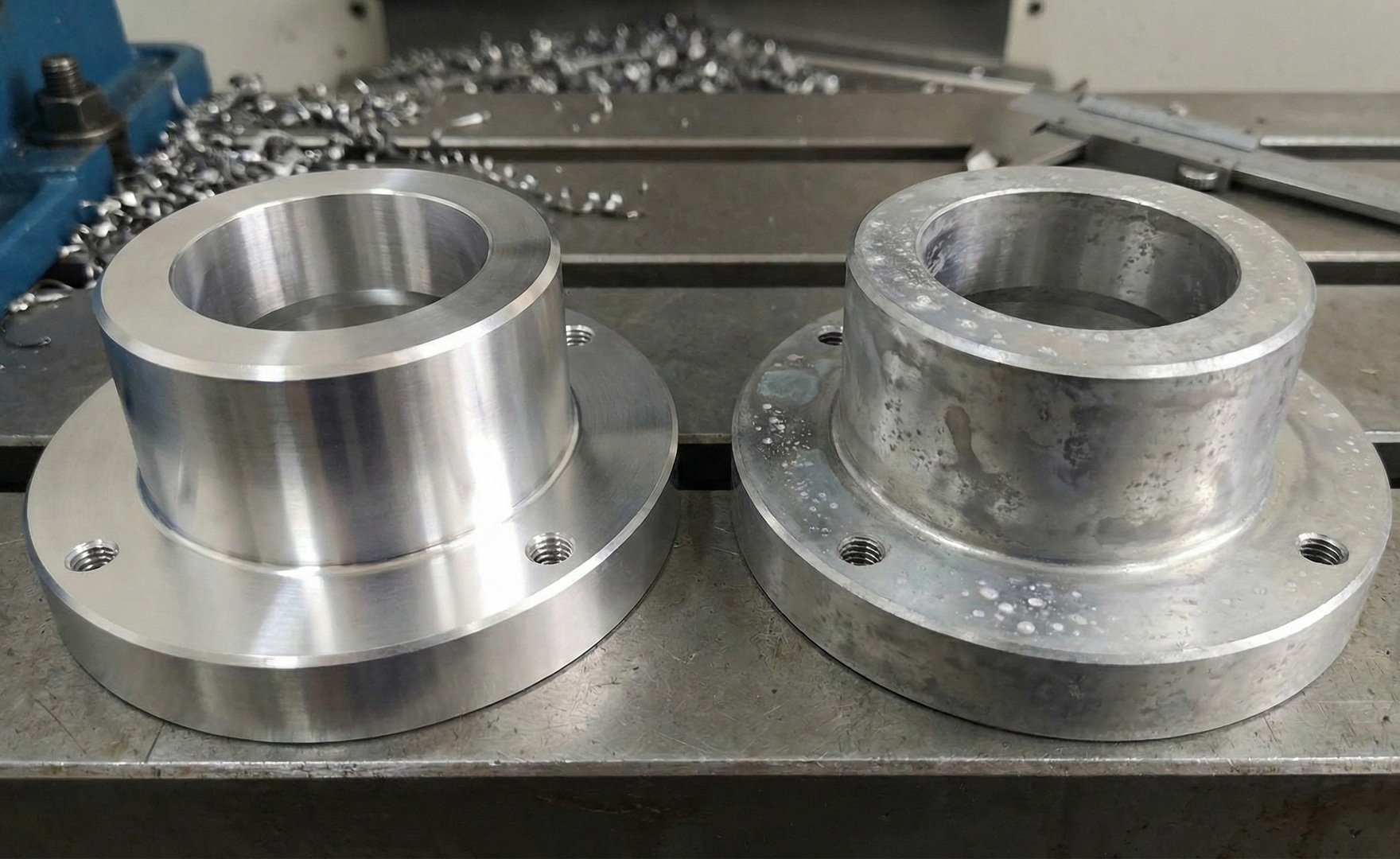
The problem of staining, meaning discoloration (from milky gray to black spots), is a quality control nightmare. If you take a part out of the machine and see discoloration, three factors are most often to blame:
- Excessive alkalinity: If the pH of your coolant has exceeded a safe level, a chemical reaction occurs that forms aluminates on the surface. These look like "dirty stains".
- Lack of inhibitors: A good coolant for aluminum must contain special passivating additives that create a protective barrier on the metal surface in a fraction of a second after cutting.
- Leaving coolant on the part: If the part is not quickly washed and dried after machining, water evaporates and the concentration of aggressive coolant components in the droplets increases, locally etching the material.
Built-up edge (BUE) - the silent enemy of a smooth surface
In aluminum machining, cooling is treated not only as a way to reduce temperature, but above all as lubrication. Aluminum is a "sticky" and ductile metal. Without sufficient lubricity, built-up edge (BUE) occurs.
Microscopic aluminum particles "weld" themselves to the cutting edge of the milling cutter or insert. As a result, it is not the sharp cutting tool that cuts the material, but the piece of aluminum stuck to it that "tears" the machined surface.
Symptoms of BUE:
- Sudden deterioration of surface roughness (Ra).
- Increased spindle load.
- Faster wear or chipping of the insert on the next entry into the material.
High-quality coolant for aluminum contains esters or other lubricating additives that create a film preventing chips from adhering to the tool, even at high cutting speeds.
Universal vs. dedicated coolant - what should you choose?
We often hear the question: "Can I use the same coolant for stainless steel and aluminum?". The answer is: Yes, but only if it is a modern new-generation coolant.
Older types of universal coolants often had a high pH to protect steel from rusting, which ended tragically for aluminum.
When choosing coolant for a workshop where various materials are machined (a so-called job shop), look for products that have:
- Stable pH in the 8.8-9.2 range (safe for both groups of metals).
- A corrosion inhibitor package for non-ferrous metals.
- High mineral oil or ester content (for better lubrication of aluminum).
Solutions from the Technar range
In our range, we focus on proven solutions from Master Fluid Solutions (TRIM), which are widely used in the aerospace industry (where aluminum dominates).
- TRIM MicroSol 590XT coolant: This is a semi-synthetic product that behaves like an oil-based coolant (excellent lubrication, no built-up edge on aluminum), while also cooling titanium and steel very effectively. It has aerospace approvals and is safe for 7000-series alloys.
- TRIM C116: High-performance synthetic coolant. An excellent choice where maximum heat removal is the priority (e.g. in HSC machining) and machine cleanliness is important. It provides excellent visibility of the machining process and low foaming, performing well with selected aluminum alloys where rapid cooling without an oil film is required.
- CoolPAK S5628 coolant: An economical alternative that performs very well with aluminum, ensuring no staining and stable operation without unpleasant odors.