




Blog
CNC Reamers: Precise Hole Finishing Step by Step
In the world of modern machining, precision matters at every stage. One of the key tools that makes it possible to achieve a perfect hole finish is the CNC reamer. Although they often remain in the shadow of more spectacular tools, they are responsible for the final finishing touch that makes the difference.
Our range includes a wide selection of CNC tools adapted to various industrial needs and applications. We offer, among others, drills, milling cutters, and high-quality CNC reamers, ideal for precise hole finishing. We invite you to contact a representative in your region.
What are CNC reamers?
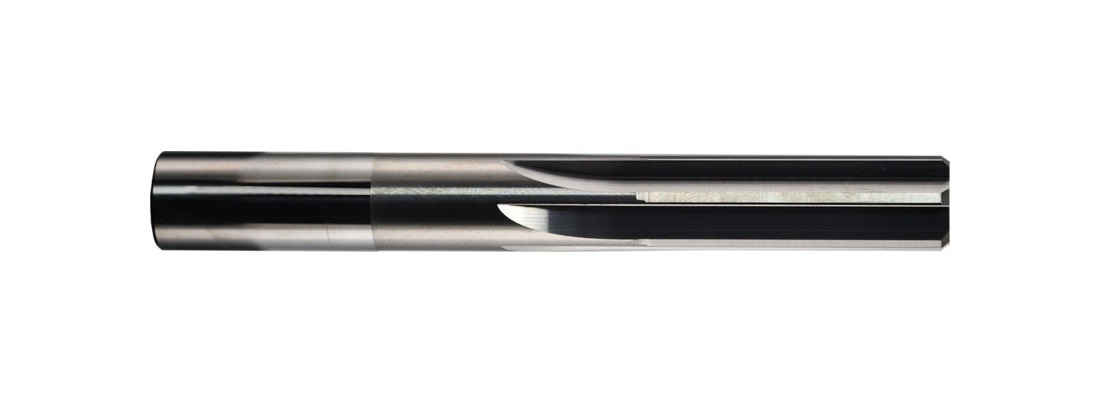
CNC reamers are specialized cutting tools used for finishing holes. Their purpose is to improve the dimensional accuracy and surface quality of a hole previously made with a drill or milling cutter. They usually work with a very small machining allowance, from a few to several dozen hundredths of a millimeter.
Unlike drilling, reaming is not used to create holes from scratch, but to finish them, with an emphasis on cylindricity, smoothness, and dimensional accuracy.
Choosing a reamer: what should you pay attention to?
When selecting CNC tools for reaming, it is worth considering several key parameters:
- Hole diameter – the reamer should have a precisely defined diameter, usually with an H7 tolerance or tighter.
- Type of workpiece material – different reamers are suitable for aluminum, stainless steel, or titanium.
- Hole type – through or blind? This affects the tool design.
- Surface quality requirements – the higher the requirements, the more important the cutting-edge geometry and coating become.
The reaming process: step by step
Step 1: Preliminary drilling
We start by making a hole with a diameter slightly smaller than the target size. This stage can be performed with a conventional twist drill or a step drill.
Step 2: Setting cutting parameters
For reamers, lower spindle speeds and feeds are typical compared with conventional drilling. Excessive feed can lead to vibration and poorer surface quality.
Step 3: Reaming
At this stage, all factors come into play: setup precision, tool quality, and machine rigidity. The tool removes a small amount of material, but does so with exceptional accuracy.
Step 4: Dimensional inspection
After reaming, measurement follows, often using gauges, micrometers, or a coordinate measuring machine. Even a microscopic deviation can determine whether a part is accepted or rejected.
Common reaming mistakes
Although the process seems simple, mistakes are easy to make:
- Using a dull reamer – this leads to overheating and an uneven surface.
- Excessive spindle speed – risk of vibration and poor accuracy.
- Insufficient cooling – reduced tool life due to incorrect selection of coolant.
- Lack of coaxiality between the reamer and the hole – the result is a so-called "barrel-shaped" hole.
Which CNC reamers should you choose?
On the market, you can find both solid reamers, most often made of carbide, and models with replaceable inserts. The latter are more economical for large production runs. Leading manufacturers of CNC tools, such as Kyocera SGS, offer a wide range of reamers adapted to various applications.
Summary
CNC reamers are the quiet heroes of precision machining. Properly selected and used, they guarantee accuracy that cannot be achieved by drilling alone. In a world where every micron matters, it is worth investing in quality, both in tools and in the process. And as we know, it is the details that make up the whole.